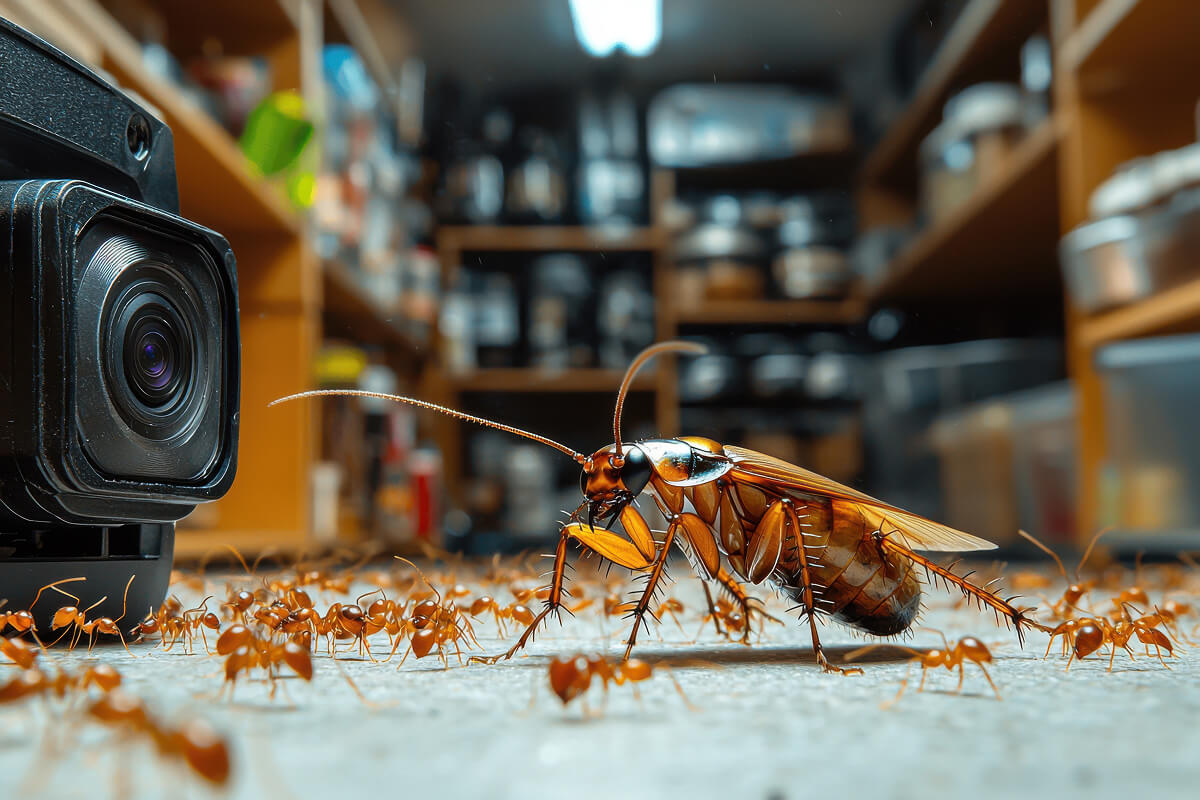
This page helps homeowners explore recurring ant activity that may be linked to food, moisture, entry conditions, weather, or outdoor context. A single ant does not identify species or scope.
Repeated trails, live ants near food, water, or openings, activity around windows or sinks, and small accumulations near a crack or void can be useful observations.
Repeated trails, live ants near food, water, or openings, activity around windows or sinks, and small accumulations near a crack or void can be useful observations.
Food residue, sweet or greasy spills, moisture or leaks, gaps around doors, windows, pipes, or utilities, and exterior vegetation can contribute.
Food residue, sweet or greasy spills, moisture or leaks, gaps around doors, windows, pipes, or utilities, and exterior vegetation can contribute.
Counters, pantries, pet-food areas, sinks, bathrooms, windows, doors, foundation edges, and wall or utility transitions are useful areas to note safely.
Repeated activity can be disruptive in food-preparation or storage areas and may point to a recurring route into a structure.
Seal food, clean spills, avoid leaving accessible food out, address moisture, and note route or location changes. These steps may reduce attractive conditions but do not identify the ant type or nest location.
Independent providers set pricing and service terms. Activity location, access, property conditions, species identification, requested scope, and follow-up needs can affect a local discussion.
Ant activity can be influenced by food, moisture, entry conditions, weather, and outdoor context. A returning trail does not by itself identify the ant type, nest location, or the scope that may be appropriate.
No. Species identification usually needs more than a single glance or image. Note repeated trails, locations, timing, and nearby conditions instead of relying on one observation.
Record where trails appear, the times of day, affected rooms, food or moisture nearby, and any exterior edge or opening close to the route. Share only observations made safely.
Cleaning spills and reducing accessible food or moisture may help reduce attractive conditions, but those steps do not identify the ant type, nest location, or appropriate provider scope in every situation.
If available, a provider may ask about trails, rooms, timing, property context, and access, then explain its own assessment, recommendations, scheduling, price, and warranty terms directly. Availability is not guaranteed.
Ant activity can be influenced by food, moisture, entry conditions, weather, and outdoor context. A returning trail does not by itself identify the ant type, nest location, or the scope that may be appropriate.
No. Species identification usually needs more than a single glance or image. Note repeated trails, locations, timing, and nearby conditions instead of relying on one observation.
Record where trails appear, the times of day, affected rooms, food or moisture nearby, and any exterior edge or opening close to the route. Share only observations made safely.
Cleaning spills and reducing accessible food or moisture may help reduce attractive conditions, but those steps do not identify the ant type, nest location, or appropriate provider scope in every situation.
If available, a provider may ask about trails, rooms, timing, property context, and access, then explain its own assessment, recommendations, scheduling, price, and warranty terms directly. Availability is not guaranteed.
PestReliefUSA helps homeowners understand pest concerns and request connections with independent providers when relevant options are available.
Explore common pest signs, understand your options, and request appropriate local help when you are ready.
* Practical guidance for homeowners comparing pest control options and preparing for local help.
Need help now? Start your request →
Copyright © 2026 PestReliefUSA. All rights reserved.