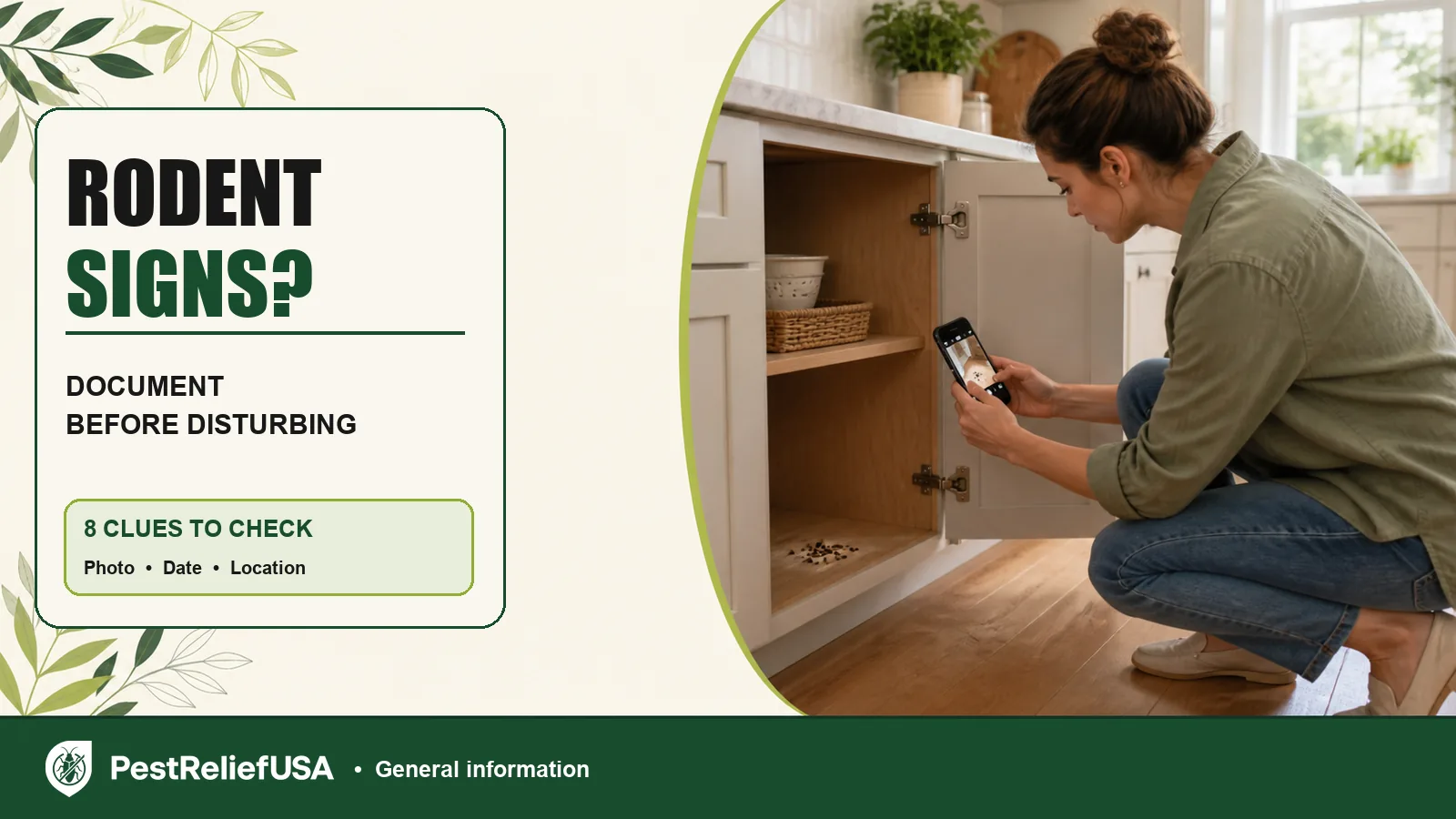
Signs of rodent activity often appear before anyone sees a mouse or rat. In a house, droppings, gnaw marks, disturbed food, nesting material, nighttime sounds, tracks, rub marks, and stale odors can all justify a closer look. No single clue confirms the species, the size of a population, or whether activity is current, so document where and when the evidence appears before deciding what to do next.
This guide helps U.S. homeowners recognize and record possible rodent evidence without treating a photograph or one isolated mark as a diagnosis. PestReliefUSA provides general information and may help connect users with independent providers. Those providers—not PestReliefUSA—determine identification, findings, recommendations, scope, availability, treatment, scheduling, pricing, follow-up, warranty, and contract terms.
Quick answer: What are the most common rodent infestation signs?
The most common rodent infestation signs are droppings near food or concealed routes, new gnawing, damaged packaging, shredded nesting material, scratching sounds, footprints or tail marks in dust, greasy-looking rub marks, and unusual odors from hidden areas. The U.S. Environmental Protection Agency notes that people may never see a mouse or rat unless a problem is severe, making evidence-based inspection especially useful.
- Document the location: Note the room, cabinet, wall edge, attic zone, garage bay, crawlspace, or exterior opening.
- Record the date: A dated photo makes it easier to recognize whether evidence returns or changes.
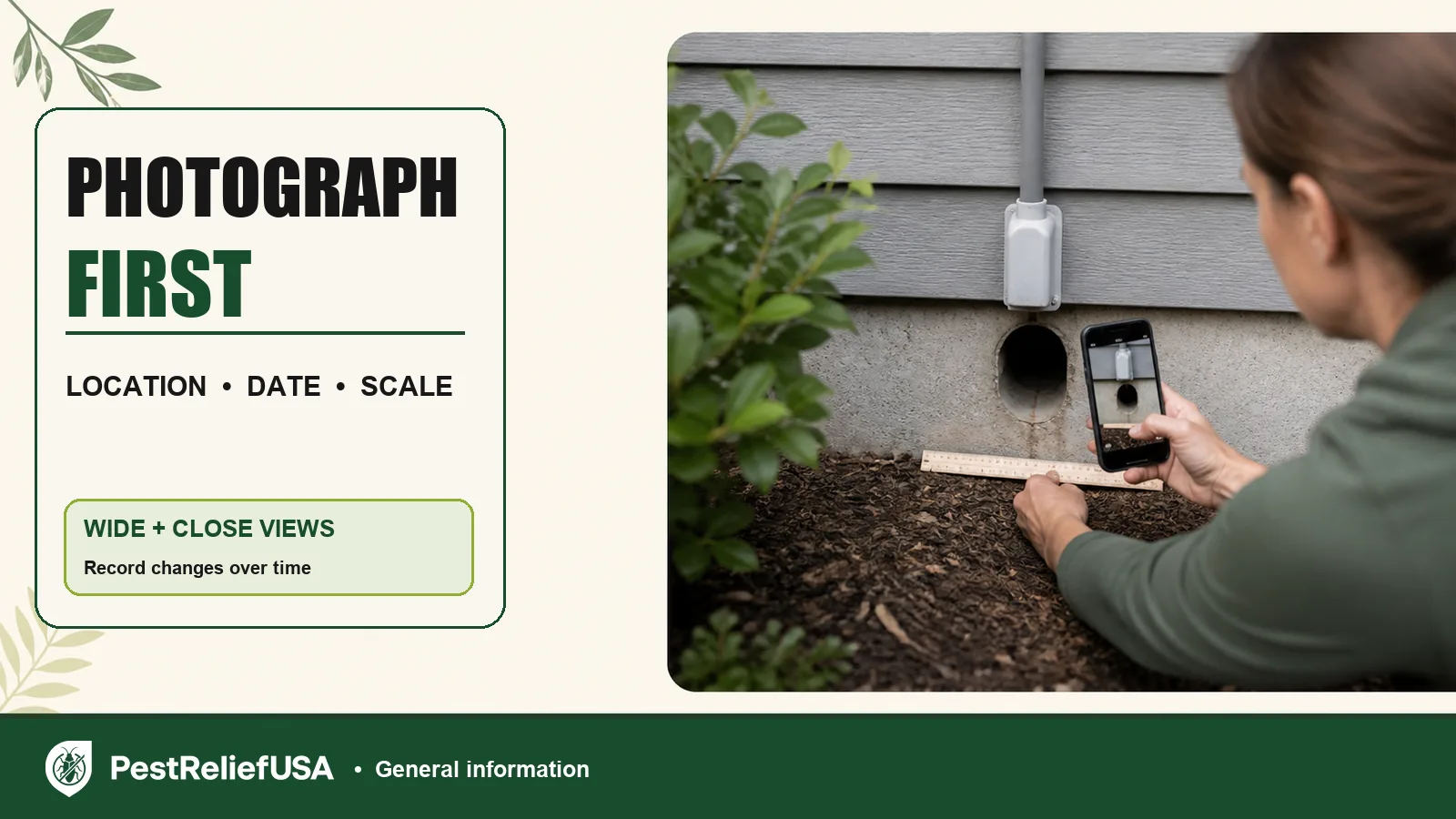
- Include scale safely: Place a ruler or common object near accessible evidence without touching droppings or nesting material.
- Avoid conclusions from one clue: Insects, pets, building movement, moisture, and ordinary household debris can sometimes produce similar-looking evidence.
1. Droppings in cabinets, drawers, and travel areas
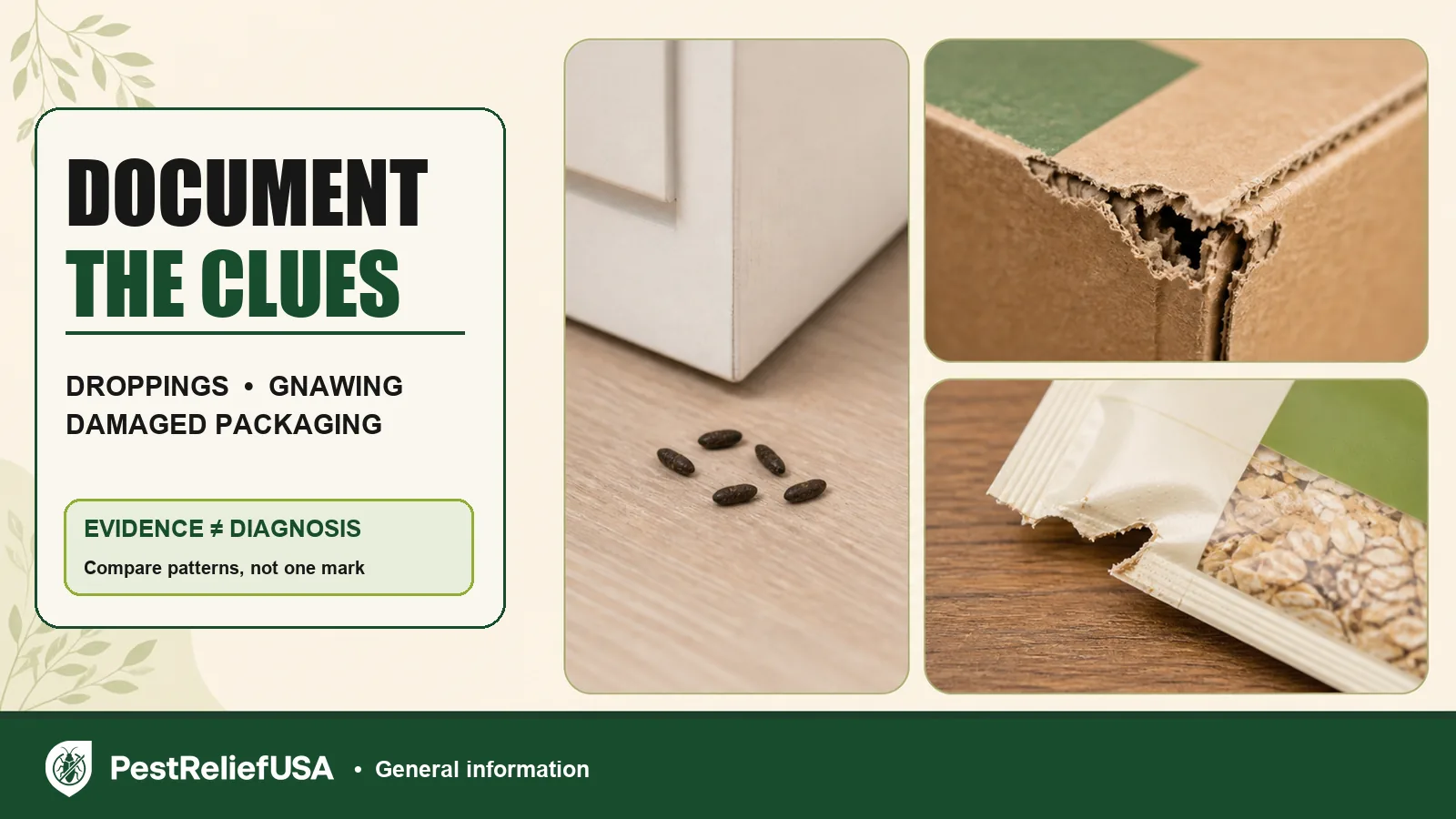
Droppings are one of the clearest reasons to investigate possible rodent activity. Common places include food-storage cabinets, drawers, areas beneath sinks, utility rooms, wall edges, attics, garages, and concealed spaces behind appliances. Finding droppings establishes that an animal was present, but appearance alone may not reliably establish species, population size, or current activity.
Do not sweep or vacuum dry rodent droppings. The Centers for Disease Control and Prevention cleanup guidance warns that sweeping or vacuuming contaminated material can send particles into the air. Keep children and pets away from the area, avoid disturbing the material, and follow current CDC instructions for ventilation, protective equipment, wet disinfection, and disposal. Heavy contamination or inaccessible areas may require additional precautions or qualified help.
2. Gnaw marks and newly damaged materials
Mice and rats gnaw on many materials. Possible clues include tooth marks on food packaging, wood, plastic containers, doors, wall edges, stored belongings, and accessible wiring. A fresh-looking mark may be lighter in color or accompanied by small debris, while an older mark can darken or collect dust. Those visual differences are not a dependable clock, so use dated photos and repeat observations rather than assigning an exact age.
Damaged wiring can create a safety concern. Do not handle exposed conductors or energize equipment that appears damaged. If gnawing involves electrical wiring, gas-related components, structural materials, or another potentially hazardous system, keep clear and contact an appropriate qualified professional.
3. Disturbed food and damaged packaging
Nibbled food, torn bags, holes in cardboard boxes, and scattered crumbs can indicate access to a pantry or storage area. Check nearby shelves, cabinet corners, appliance gaps, pet-food storage, and recycling zones for additional evidence. One damaged package is not conclusive because insects, pets, handling, or ordinary wear may also be responsible.
Discard food that may have been contaminated, following applicable food-safety guidance. Store replacement food and pet food in durable containers with secure lids. These steps reduce food access, but they do not by themselves show whether rodents remain inside or how they entered.
4. Shredded nesting material in sheltered spaces
Shredded paper, fabric, insulation, cardboard, or dried plant matter gathered in a sheltered location can be possible nesting material. It may appear in cabinets, storage boxes, wall voids, attics, garages, behind appliances, or within stored equipment. Ordinary clutter can look similar, so look for a combination of evidence such as droppings, gnawing, tracks, or disturbed food nearby.
Do not pull apart a suspected nest with bare hands. Limit access and follow current public-health precautions before cleanup. A nest in insulation, ductwork, machinery, or a hard-to-reach void may be more safely evaluated by a qualified provider.
5. Scratching, scurrying, or movement sounds
Scratching or light movement may be heard in walls, ceilings, cabinets, attics, crawlspaces, or utility chases, often when a home is quiet. Record the time, room, duration, and whether the sound repeats along the same path. Sound can help narrow an inspection area, but it cannot identify an animal by itself. Birds, squirrels, insects, pipes, ducts, and normal building movement can produce confusing noises.
Avoid cutting into walls or ceilings solely to locate a sound. Opening a building cavity can disturb contamination, damage utilities, or create a new access route. An independent inspection can consider the sound together with accessible evidence and construction details.
6. Tracks, tail marks, and disturbed dust
Small footprints, possible tail marks, or narrow travel paths may appear in dust on shelves, beams, garage edges, or other undisturbed surfaces. Photograph the entire area and a closer view with scale. Do not spread tracking powder, pesticide dust, or another substance around a home merely to create prints; products and application rules vary, and unnecessary dust can create exposure or cleanup problems.
Tracks are most useful when their location connects other clues—for example, damaged packaging and droppings along the same concealed edge. A single print may belong to another small animal or may be too incomplete for reliable identification.
7. Rub marks along repeated routes
Repeated contact may leave dark or greasy-looking marks along wall edges, pipes, beams, openings, or other travel routes. Dirt, moisture, airflow, footwear, and building use can create similar discoloration, so a rub mark should be treated as supporting evidence rather than proof.
Photograph the mark before cleaning and note nearby openings or other clues. Do not assume that the darkest route is the only route; rodents can use concealed gaps and change their travel patterns when an area is disturbed.
8. Unusual or stale odors from hidden areas
A persistent stale or musky odor near a cabinet, appliance gap, wall void, attic, or storage zone can justify inspection, especially when it appears with droppings or nesting material. Odor alone is nonspecific. Plumbing leaks, mold, stored products, drains, dead insects, and other building conditions may smell similar.
A strong decomposition odor may indicate a dead animal in a concealed location, but the location and source should not be guessed from smell alone. Avoid opening walls or handling remains without appropriate precautions. Local rules and public-health recommendations may affect cleanup and disposal.
Where should homeowners look for signs of mice or rats?
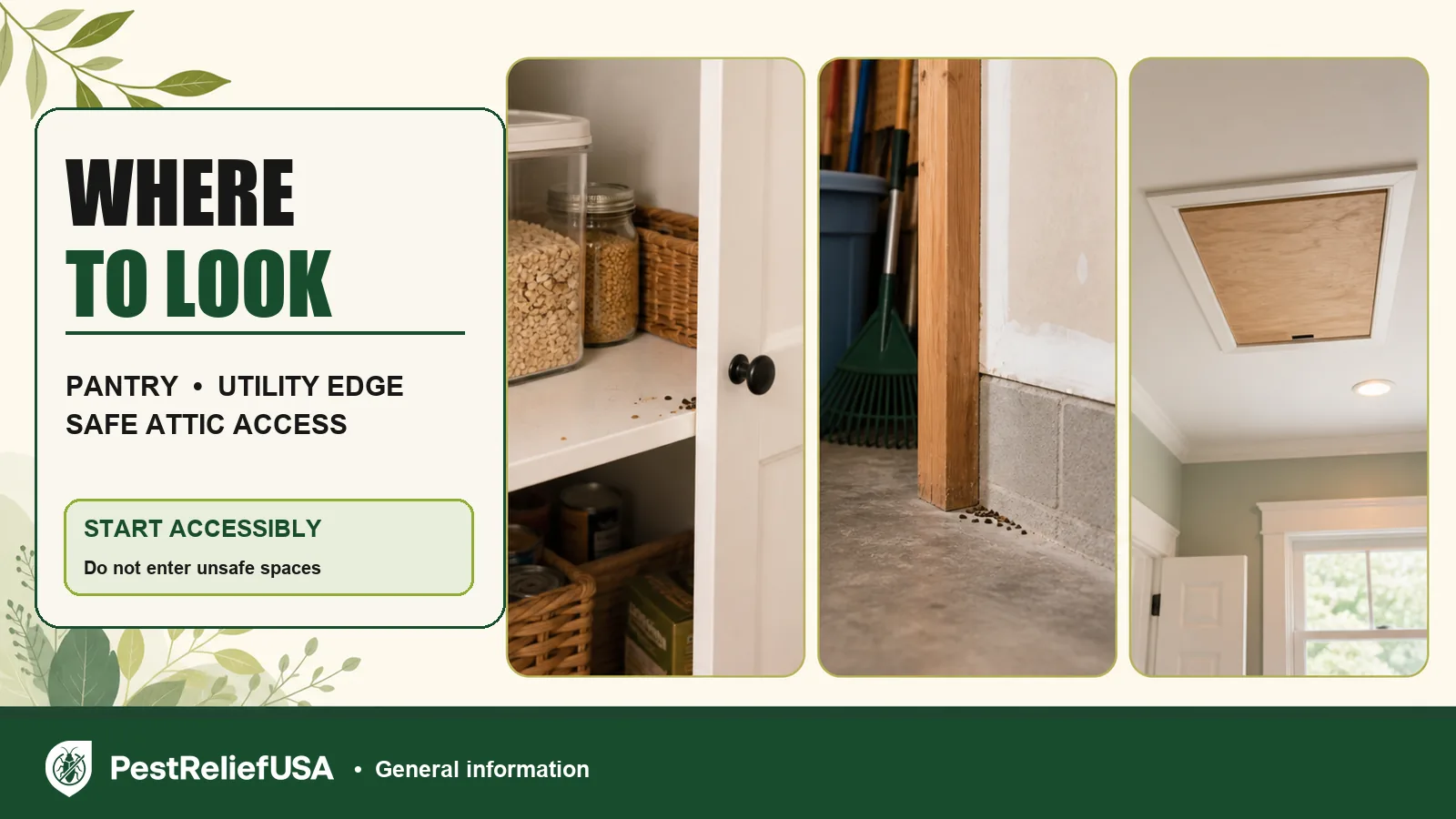
Start with accessible places that combine shelter, food, water, warmth, or travel edges. Check without moving heavy appliances, entering unsafe attics or crawlspaces, or disturbing contaminated material.
- Pantries, food cabinets, drawers, and areas beneath sinks.
- Behind or beside refrigerators, ranges, dishwashers, and laundry equipment when safely accessible.
- Garages, utility rooms, storage areas, and pet-food zones.
- Attic access areas, basement edges, and accessible crawlspace entrances.
- Door sweeps, garage-door corners, vents, rooflines, utility penetrations, and foundation gaps.
- Exterior trash, compost, dense storage, vegetation, or other sheltered areas near the structure.
The CDC recommends regularly checking inside and outside a building for droppings and gnaw marks and reducing access to food, water, and shelter. Its broader rodent-control guidance separates three connected tasks: safely clean contaminated areas, seal entry points, and address animals that may remain.
How to document possible rodent activity safely
- Photograph before disturbing: Capture a wide view showing the room or building feature, followed by a close view with scale.
- Write a short observation: Record what was visible or audible without labeling the species or severity.
- Map repeat locations: Mark cabinet, wall, attic, garage, or exterior points on a simple floor plan.
- Note recurrence: After an area has been cleaned using current CDC guidance, record whether new evidence appears.
- Protect people and pets: Restrict access to contaminated material, damaged wiring, traps, baits, and unsafe building areas.
Documentation helps an independent provider understand the pattern, but it does not replace an inspection. A provider may consider building construction, accessible openings, sanitation conditions, evidence locations, and local rodent behavior before recommending a scope.
What should you do after finding rodent infestation signs?
Begin with low-risk steps: keep people and pets away from contaminated areas, protect food, document accessible evidence, and review current CDC cleanup guidance. The EPA advises removing food, water, and shelter and preventing access as core parts of rodent management. Do not place pesticide products or improvised traps without understanding label directions, placement risks, and applicable requirements.
Before sealing an opening, consider whether animals may still be inside and whether the opening affects ventilation, drainage, utilities, or another building system. Exclusion and control decisions should fit the structure and evidence pattern. Homeowners comparing independent help can review the Rodent Control information page, learn how PestReliefUSA works, or share non-urgent property details through Get Help. Provider participation and availability vary.
Frequently asked questions
Does one dropping mean there is an infestation?
One dropping-like object is not enough to determine species, population size, or current activity. Photograph the location, avoid dry sweeping or vacuuming, follow CDC cleanup guidance, and monitor whether evidence returns.
Can droppings show whether rodents are still active?
Appearance alone is unreliable. The CDC notes that safely cleaning an area and then finding new droppings can indicate current rodent presence. Cleanup must follow public-health precautions.
Are scratching sounds proof of mice or rats?
No. Rodents are one possible source, but birds, squirrels, insects, plumbing, ducts, and building movement can create similar sounds. Record the time and location and look for accessible supporting evidence.
Should I vacuum rodent droppings?
No. CDC guidance says not to vacuum or sweep rodent urine, droppings, or nesting material before proper wet disinfection because contaminated particles can become airborne.
Can a photo identify whether I have mice or rats?
A clear photo can help document evidence, but images alone may not establish the species, number of animals, entry route, or appropriate response. Identification should consider multiple clues and the property context.
When should a homeowner consider independent professional help?
Consider qualified help when evidence persists, contamination is extensive, access is unsafe, wiring or building materials are damaged, the suspected route is unclear, or household conditions make traps, cleanup, or exclusion difficult. The independent provider determines findings and recommendations.
Bottom line
Signs of rodents in a house are most useful as a pattern, not as isolated proof. Document droppings, gnawing, food damage, nesting material, sounds, tracks, rub marks, and odors; handle contaminated areas according to current CDC guidance; and avoid drawing conclusions from a single photo or mark. Clear records and a property-specific inspection can support safer, better-informed next steps.