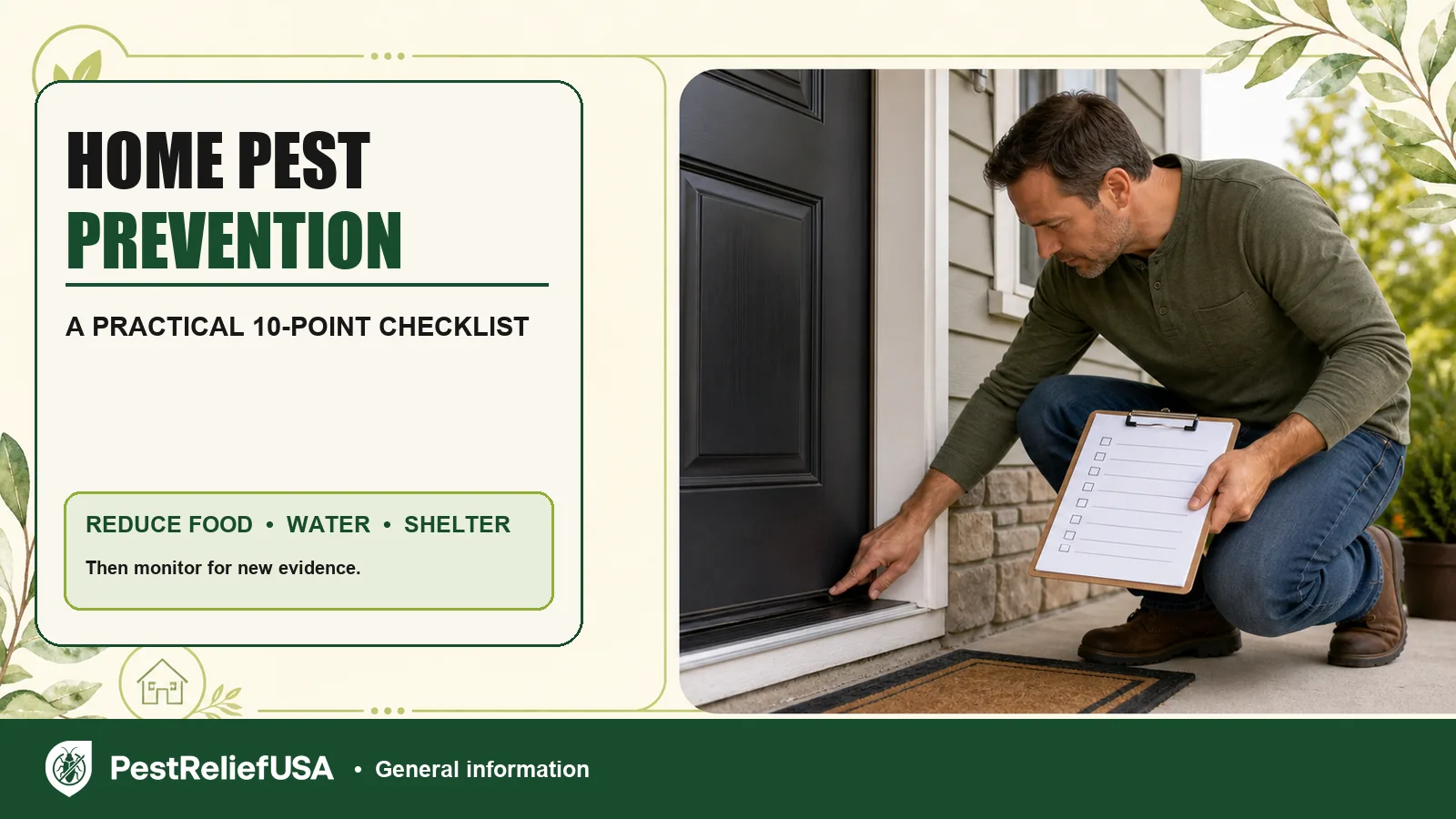
Pest prevention tips for homeowners work best when they reduce access to food, water, shelter, and entry points. A practical checklist includes sealing food and waste, fixing leaks, removing standing water, maintaining doors and screens, inspecting utility gaps, managing storage, keeping exterior vegetation and debris from creating sheltered routes, and monitoring for new evidence. Prevention lowers risk; it does not guarantee a pest-free property.
This evergreen checklist applies to routine U.S. home maintenance. Climate, construction, pest pressure, and local rules vary. PestReliefUSA provides general information and referrals; independent providers determine identification, findings, recommendations, scope, availability, treatment, scheduling, pricing, follow-up, warranty, and contract terms.
10 pest prevention tips for homeowners
- Store food and pet food in secure containers.
- Keep trash and recycling contained and clean spills promptly.
- Fix leaks and remove standing water.
- Repair screens, door sweeps, and accessible gaps.
- Keep storage organized and off damp floors where practical.
- Inspect utility penetrations, vents, roof edges, and foundations.
- Manage mulch, vegetation, firewood, and debris near the structure.
- Document evidence before cleaning or moving belongings.
The EPA’s smart pest-control guidance explains that pests such as cockroaches, rodents, and mosquitoes rely on food, water, and shelter. Removing those resources and using prevention as part of Integrated Pest Management can reduce reliance on broad pesticide use.
1. Control food sources
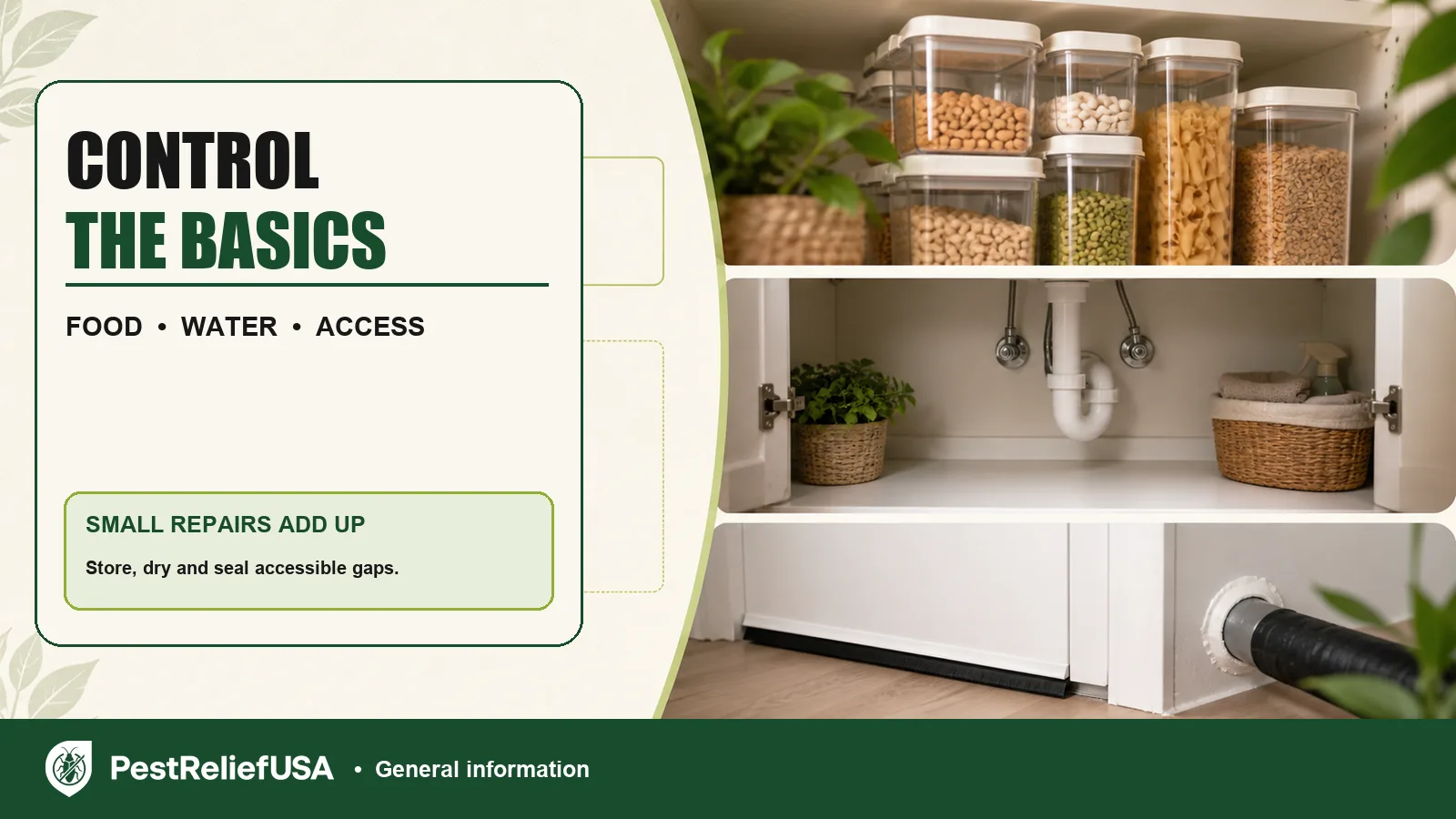
Clean crumbs and spills, rotate pantry goods, store food in durable containers, and avoid leaving pet food out overnight when practical. Use trash cans with fitting lids and clean residue from recycling. Outdoor feeding, compost, fallen fruit, and grills can also create food sources near the structure.
Cleanliness does not make a home immune to pests, and a pest problem is not proof of poor housekeeping. Food management is one part of a property-wide approach.
2. Reduce water and moisture
Repair accessible plumbing leaks, address condensation, keep gutters and drainage functioning, empty water-holding containers, and avoid overwatering indoor plants. Moisture can support mosquitoes, cockroaches, fungus gnats, termites, and other organisms, but moisture alone does not identify a pest.
Persistent dampness, sewage, roof leaks, or concealed water damage may require a plumber, roofer, drainage contractor, remediation specialist, or other qualified professional in addition to pest-related evaluation.
3. Maintain doors, windows, and screens
Check door sweeps, garage-door corners, window screens, weatherstripping, and frames for accessible gaps. Repair damaged materials using products suitable for the building component. Do not block required ventilation, drainage, fire-safety features, or emergency egress.
4. Inspect utility penetrations and exterior openings
Look around pipes, cables, vents, conduit, siding transitions, soffits, rooflines, and foundation joints. Photograph an opening with scale and monitor for nearby evidence. Opening size alone does not identify what can enter, and exclusion methods differ by pest and construction.
5. Organize storage and reduce undisturbed shelter
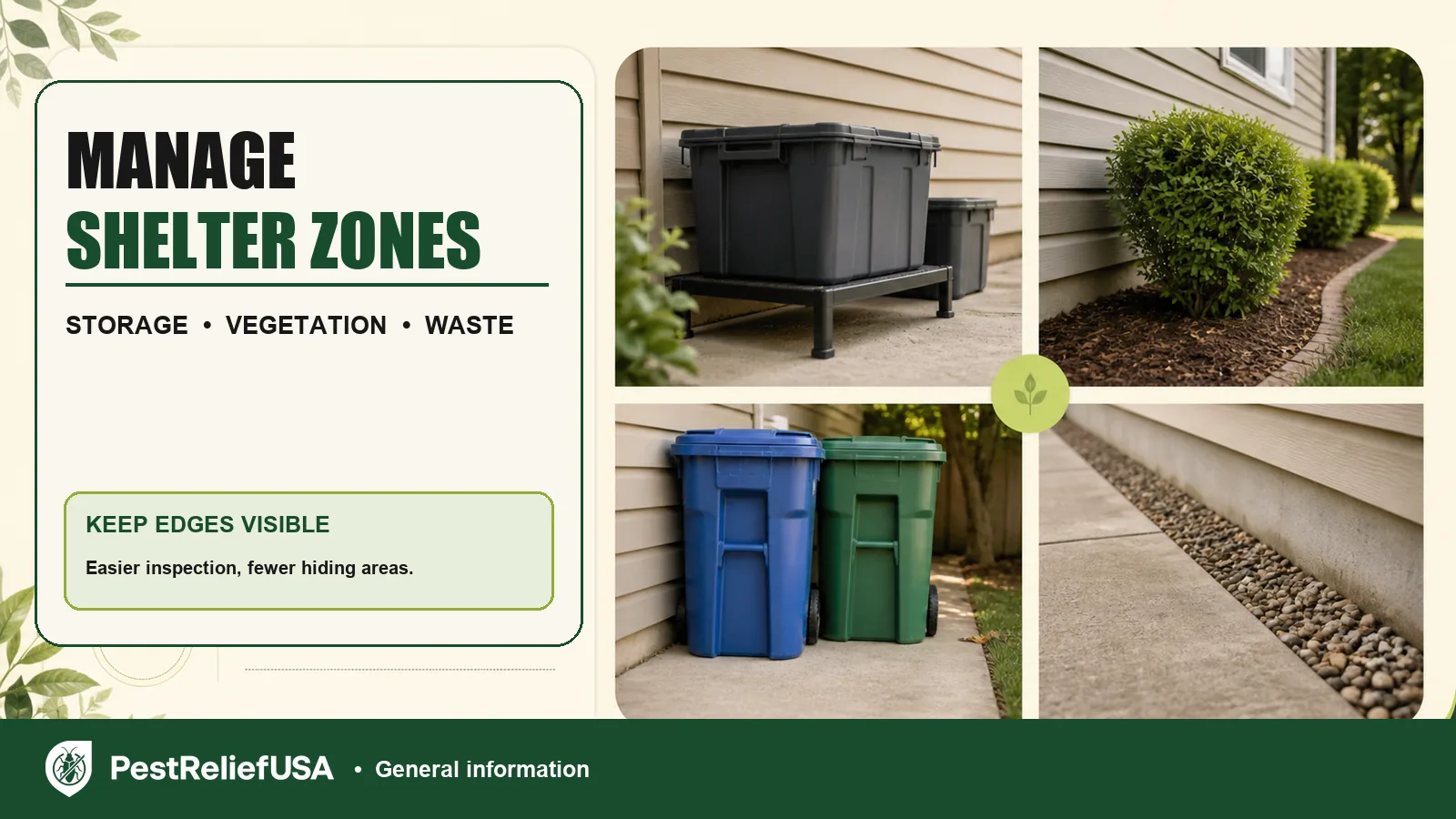
Use clear or durable containers where useful, keep aisles visible, rotate stored items, and avoid long-term piles of cardboard or fabric in damp areas. Organized storage makes droppings, webbing, gnawing, shed skins, and moisture easier to detect.
Do not move potentially bed-bug-affected items from room to room or disturb suspected rodent contamination without appropriate guidance. Prevention tasks should not spread evidence.
6. Manage vegetation, mulch, firewood, and debris
Keep vegetation from blocking inspection paths or holding moisture directly against the structure. Store firewood and lumber according to local recommendations and property constraints, remove unnecessary debris, and monitor dense mulch or groundcover near foundations.
Outdoor habitats also support beneficial insects and wildlife. Prevention should focus on building access and high-risk conditions rather than eliminating every organism from the landscape.
7. Maintain kitchens, bathrooms, laundry, and utility areas
These rooms combine water, warmth, drains, appliances, and concealed edges. Check beneath sinks, around appliance lines, behind accessible kick plates, near floor drains, and at pipe penetrations. Clean organic buildup using methods appropriate for the surface and correct the source of recurring moisture.
8. Monitor attics, garages, basements, and crawlspace access
Inspect only safely accessible areas. Look for droppings, nesting material, damaged packaging, gnawing, insect parts, water stains, or new gaps. Do not enter confined or structurally unsafe spaces, disturb insulation, or handle wildlife.
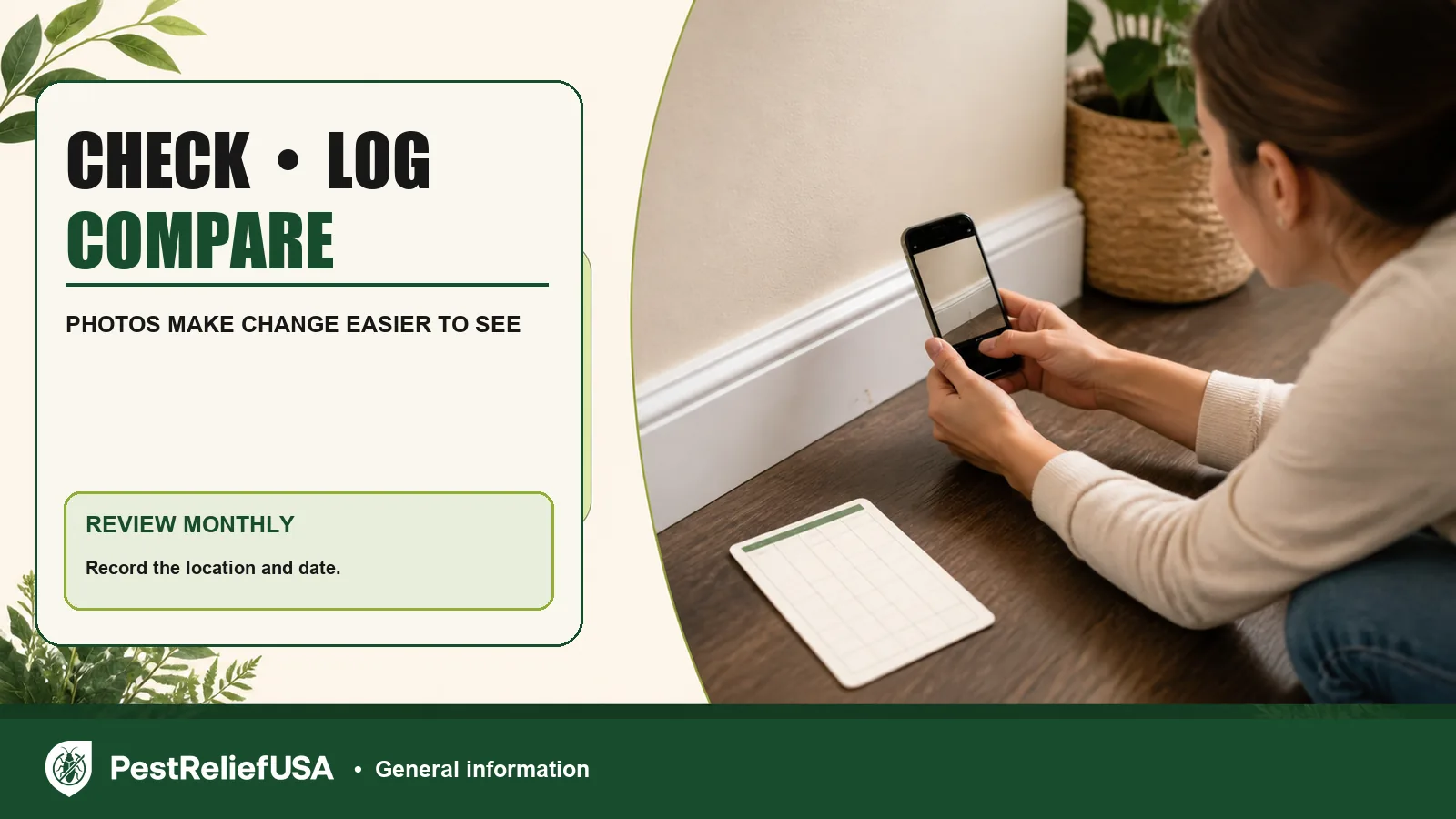
9. Use a simple monthly monitoring routine
- Walk the same interior and exterior zones.
- Photograph new evidence with location, date, and scale.
- Check whether repaired leaks or gaps remain corrected.
- Review food, waste, pet, and storage conditions.
- Escalate persistent or safety-related evidence.
The EPA describes Integrated Pest Management as monitoring and identification followed by prevention and appropriately selected controls. One sighting does not always require treatment, while repeatable evidence can justify closer investigation.
10. Use pesticides only as part of an informed plan
Do not use a product simply because it is labeled “natural,” “indoor,” or “all-purpose.” Identify the target pest, confirm that the product is registered and labeled for the intended site and pest, follow all directions, and protect children, pets, food, and water. Foggers and broad spraying are not substitutes for identification, exclusion, sanitation, or monitoring.
When prevention is not enough
Active evidence, extensive contamination, structural or wiring damage, repeated bites with physical pest evidence, inaccessible activity, or continued sightings after maintenance may justify independent evaluation. Review common signs of a pest infestation, explore the site’s pest information categories, or submit non-urgent details through Get Help. Provider availability varies.
Frequently asked questions
Can a clean home still have pests?
Yes. Pests may enter through openings, arrive with belongings, use exterior habitats, or exploit moisture and construction conditions. Sanitation helps but is not a guarantee.
How often should homeowners check for pest evidence?
A brief monthly check and an additional check after leaks, storms, travel, deliveries, renovation, or seasonal changes can make new evidence easier to recognize.
Should every exterior crack be sealed?
No. Some openings are required for drainage or ventilation, and the correct material depends on construction and the target pest. Avoid blocking building systems.
Do essential oils prevent infestations?
Do not rely on scent alone as a property-wide prevention plan. Evidence-based prevention focuses on food, water, shelter, access, monitoring, and pest-specific controls.
Does prevention replace an inspection?
No. Maintenance can reduce risk, but concealed or persistent activity may still require identification and property-specific findings.
Bottom line
A durable home pest prevention checklist combines sanitation, moisture correction, exclusion, storage management, exterior maintenance, and repeat monitoring. Focus on conditions and evidence, not promises of a permanently pest-free home.