
Pest control cost is shaped by the pest, the property, the extent and accessibility of activity, the response method, the number of visits, preparation or repair needs, and the provider’s written service terms. A price without those details is difficult to compare. PestReliefUSA does not set prices or issue quotes; independent providers determine findings, scope, pricing, scheduling, follow-up, warranty, and contract terms.
Quick answer: What affects pest control costs?
The main pest control cost factors are identification, property size and construction, evidence scope, access, treatment or exclusion approach, labor and follow-up, preparation, and contract terms. Location, licensing requirements, season, and provider availability may also affect a quote. The EPA recommends comparing quality and value—not price alone—and obtaining written estimates from prospective companies.

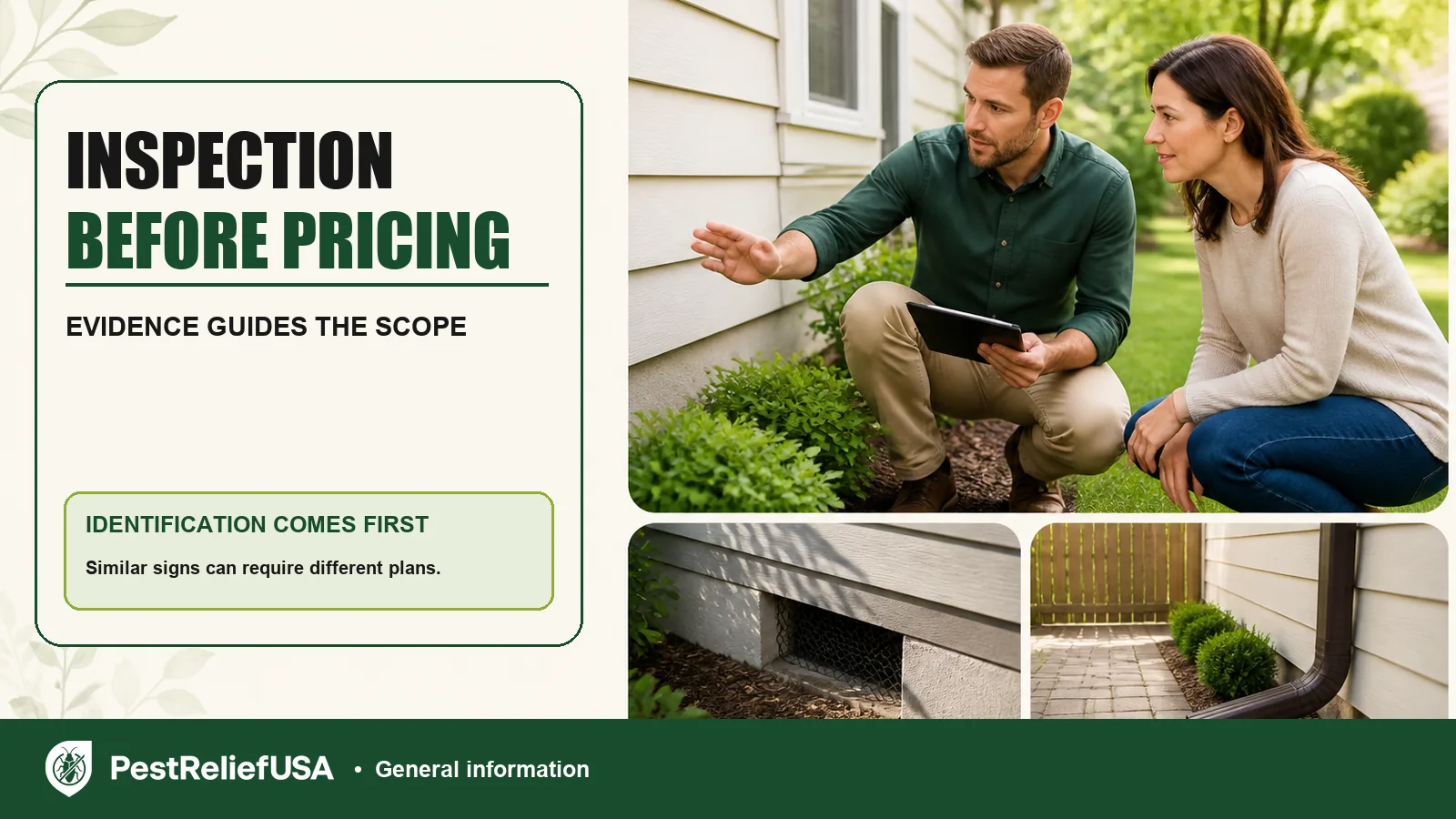
1. Pest type and confirmed identification
Different pests require different inspection skills, equipment, monitoring, exclusion, products, and follow-up. A general insect sighting, an established bed bug problem, a rodent entry issue, and wood-destroying insect evidence are not comparable scopes. Identification can also change which building areas need attention.
Do not treat an online photo or generic phone description as a final finding. A quote based on the wrong pest may omit necessary work or include work that is not relevant.
2. Property size, layout, and construction
Square footage is only one part of property context. Multiple levels, attached garages, crawlspaces, basements, attics, wall voids, shared walls, slab construction, landscaping, outbuildings, and complex rooflines can change inspection and access requirements. Multifamily properties may also require coordination beyond one unit.
A larger property does not automatically mean a proportionally higher price, and a small property is not always simple. Accessible scope matters more than a single size number.
3. Extent, distribution, and evidence pattern
Localized evidence may involve a different scope than activity across several rooms, units, exterior zones, or structural areas. Providers may consider whether evidence is current, how it is distributed, whether sanitation or moisture conditions contribute, and whether other areas require inspection or monitoring.
Visible pest numbers do not always equal the full scope. Some pests remain concealed; others are occasional invaders and may not require a broad response. This is why inspection findings should precede price comparisons.
4. Accessibility and site constraints
Blocked crawlspaces, high rooflines, dense storage, occupied rooms, sensitive equipment, locked areas, pets, children, or difficult exterior grades can affect labor, preparation, safety, and scheduling. A provider may also need to coordinate with a landlord, association, facility manager, electrician, plumber, roofer, or repair contractor.
5. Recommended approach and materials
Monitoring, sanitation, exclusion, trapping, mechanical removal, heat, baiting, targeted pesticide use, and other methods have different labor and material requirements. No method is universally appropriate. The EPA’s IPM framework supports monitoring and identification, prevention, and selection of effective lower-risk controls before broader measures.
If pesticides are proposed, ask which products may be used, why they fit the target pest and site, what preparation is required, and what label precautions apply. PestReliefUSA does not select products or application rates.
6. Number of visits, monitoring, and follow-up
Some scopes involve one visit; others require inspection, initial work, monitoring, follow-up, or recurring service. Compare what triggers a return visit, how progress is evaluated, whether monitoring devices are included, and when the provider considers the scope complete.
A lower initial price can represent a narrower scope. A higher quote may include follow-up, exclusion, reporting, or other work—but price alone does not prove quality. Read the written proposal.
7. Preparation, cleanup, exclusion, and repairs
Moving belongings, laundering, cleaning, access preparation, sealing openings, replacing door sweeps, repairing leaks, removing contaminated material, or correcting building damage may be performed by the homeowner, the pest provider, or a separate contractor. Determine what is included and what is excluded.
Pest treatment and property repair are different scopes. For termite-specific pricing, use the separate termite treatment cost factors guide, which distinguishes treatment considerations from damage repair.
8. Contract, warranty, and renewal terms
Written terms may address covered pests, service area, inspection frequency, callbacks, exclusions, renewal charges, cancellation, access requirements, and warranty limitations. A guarantee is only as meaningful as its written conditions and the company offering it.
The EPA’s service-selection guidance recommends checking credentials, asking for pesticide labels when applicable, comparing estimates, and avoiding pressure to sign immediately. State and local licensing systems vary.

How to compare pest control quotes
- Confirm the target pest and findings.
- Compare the same property areas and scope.
- List included preparation, exclusion, cleanup, and follow-up.
- Review products, methods, precautions, and alternatives.
- Check credentials and applicable licensing.
- Read renewal, callback, warranty, and cancellation terms.
- Ask what would change the final price.
Homeowners can review how the PestReliefUSA referral process works and submit non-urgent property details through Get Help. Independent providers decide whether they participate, whether service is available, and what they quote.
Frequently asked questions
Can a provider give an exact price without an inspection?
Sometimes a provider can describe a starting range or standard service, but the final scope may depend on identification, access, evidence, property conditions, and written terms. Ask which assumptions the estimate uses.
Why can two pest control quotes differ?
They may cover different areas, methods, visits, repairs, exclusions, monitoring, or warranty terms. Compare line items and findings rather than the total alone.
Is the cheapest pest control quote the best?
Not necessarily. EPA guidance says cost should not be the only factor. Competence, credentials, scope, precautions, and written terms also matter.
Does pest control cost include repairs?
Not automatically. Exclusion, cleanup, moisture correction, wiring repair, and structural repair may be separate. The proposal should state what is included.
Does PestReliefUSA set prices?
No. PestReliefUSA is an information and referral resource. Independent providers determine findings, recommendations, availability, scope, pricing, scheduling, and terms.
Bottom line
Useful pest control price comparisons begin with the same pest, property areas, access assumptions, method, visits, preparation, and written terms. Ask for a clear proposal and compare scope and competence alongside cost.