
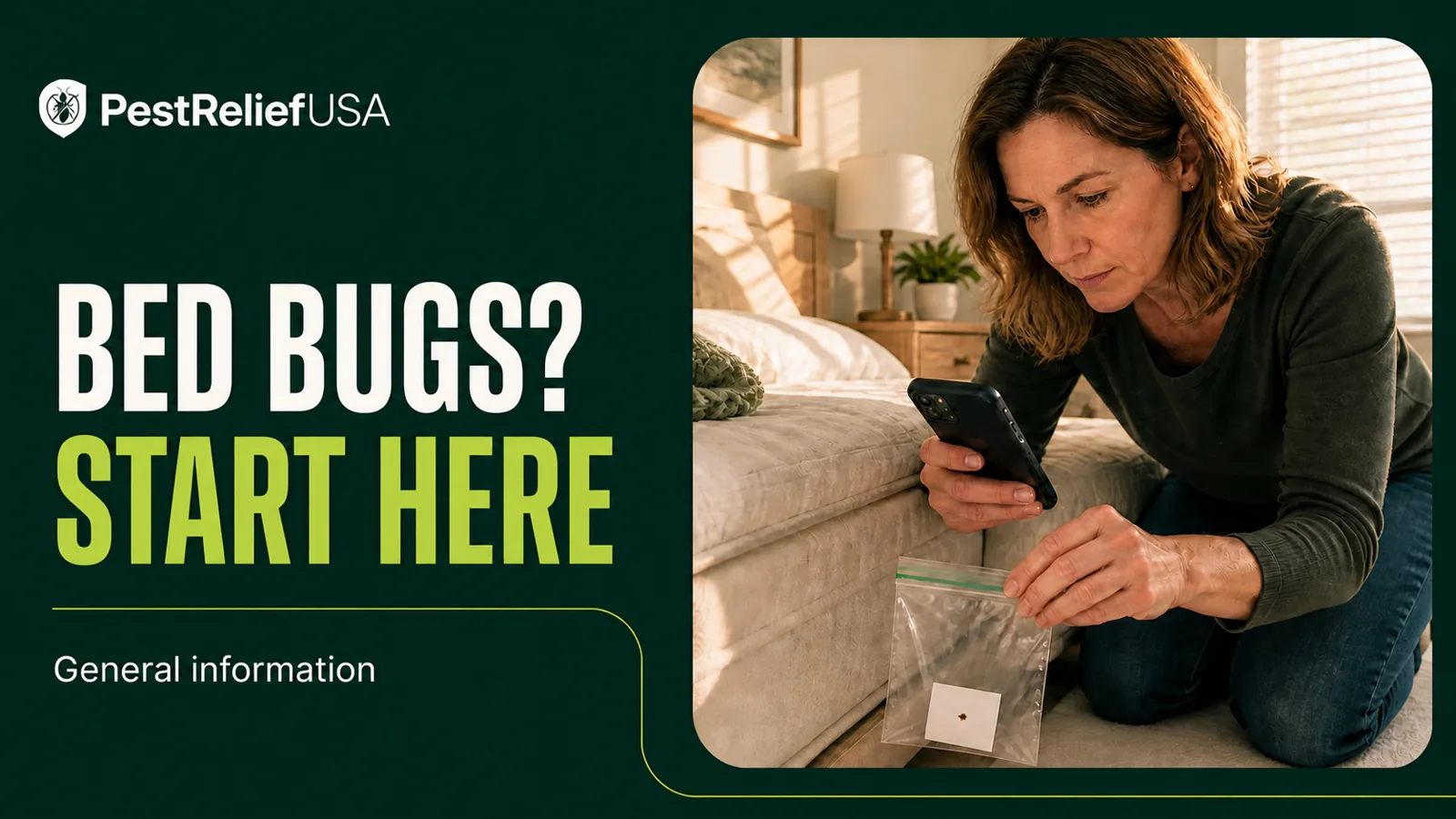
Finding a suspected bed bug can be unsettling, but the first response should be calm and practical: preserve the evidence, avoid carrying belongings to another room, contain movable items before transport, and get a qualified identification before choosing a treatment. If you rent or live in shared housing, notify the responsible manager promptly and keep a record of what you found.
A skin reaction alone cannot confirm bed bugs. The most useful next step is to document the insect or other physical evidence, then make a plan that fits the property and any housing requirements. This guide explains what to do if you find bed bugs without turning a suspected sighting into a diagnosis or a one-size-fits-all treatment plan.
What to do if you find bed bugs right now
Use these seven first steps to reduce the chance of spreading a suspected problem while you gather reliable information.
- Pause before moving anything. Do not carry bedding, luggage, clothing, furniture, or loose items into another room, a vehicle, or another home. Bed bugs can travel in folds, seams, and belongings, so unnecessary movement can make a small issue harder to sort out.
- Preserve a sample if you can do so safely. A clear sealed bag or small sealed container can help an extension professional or another qualified identifier review the evidence. Take a close photo and note the room, item, date, and exact location. The U.S. Environmental Protection Agency (EPA) recommends collecting a sample for expert identification and keeping records through the process. Read the EPA’s bed bug control guidance.
- Look for physical clues without dismantling the room. Check the immediate sleeping area and nearby seams, folds, bed frame, headboard, and furniture for an insect, shed skins, or rusty-colored spots. A quick, careful look is enough for now; avoid scattering items or beginning a major cleanup before you know what you have found.
- Contain items that truly need to be moved. Place movable items in a sealed bag or closed container before transporting them. Label the container with the room and date so the evidence and timeline stay clear. Do not leave potentially affected bags in a hallway, common laundry room, vehicle, or another sleeping area.
- Write down the facts. Record who found the item, where it was found, when it was found, and any photos or samples you saved. This record can make later identification, property communication, and a written plan more precise.
- Notify the responsible party when applicable. In an apartment, dorm, hotel, assisted-living setting, or other multi-unit property, notify the manager or owner using the property’s usual reporting process. Save the message and follow the lease, housing policy, and local reporting requirements that apply to your location.
- Get identification before selecting control steps. Many insects and household clues can be mistaken for bed bugs. Qualified identification helps prevent unnecessary pesticide use, unsafe home remedies, and expensive disposal decisions.
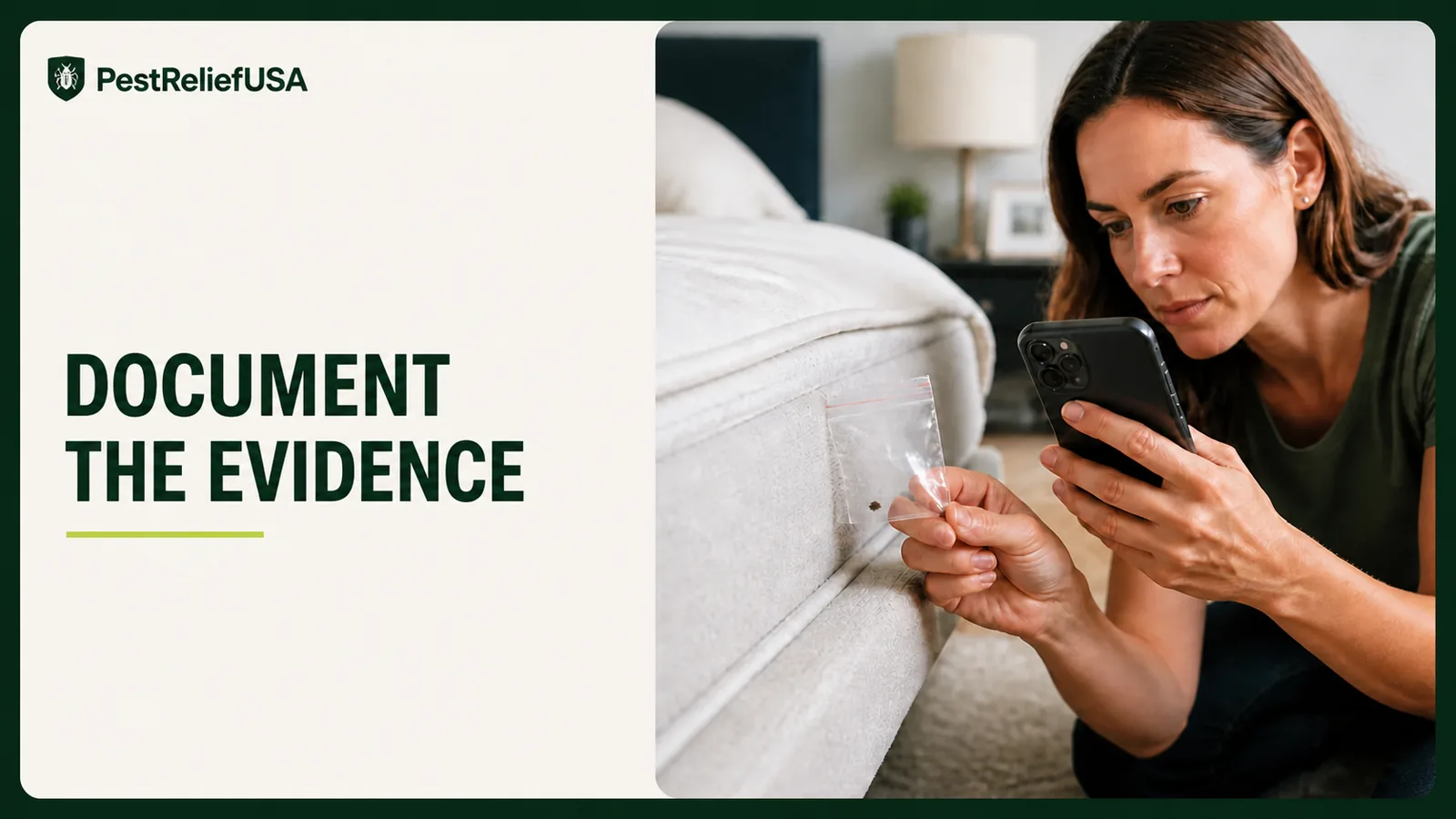
Confirm the evidence before choosing treatment
Bed bugs are small, flat, reddish-brown insects, but a photo of a bite, an itchy patch of skin, or a small bug seen briefly is not enough to confirm an infestation. The CDC notes that bite reactions vary and can resemble reactions to other insects. Confirmation is best based on an adult or nymph collected near the place where a person sleeps, together with physical evidence such as shed skins or rusty-colored spotting. CDC’s overview of bed bugs explains the common clues and their limits.
Look-alikes are common. University of Minnesota Extension reports that many submitted samples are not bed bugs, which is why a sample or clear photo is more useful than guessing from a description. That regional observation is not a national rate, but it is a helpful reminder to verify before spending money or applying anything. See University of Minnesota Extension’s identification guidance.
Bed bugs are not known to spread disease, according to the CDC. Bites can itch, and rare allergic reactions can occur, but no article can diagnose a person from a skin reaction. If symptoms are concerning or you suspect an allergic reaction, contact an appropriate healthcare professional.
How to limit spread while you decide what comes next
Containment is about reducing unnecessary transport, not about trying to solve the entire problem in one afternoon. Keep the suspected area organized, avoid moving loose piles from room to room, and use sealed bags or closed containers when an item must be transported. Note what went into each container instead of relying on memory.
Do not assume that an introduction means a home is unclean. The CDC states that bed bugs can be found in many kinds of places and that cleanliness does not determine whether they are present. Focus on evidence, pathways, and a careful plan rather than blame.
Use a simple record instead of trying to remember details later. Include the room, object, date, photo filename, and whether the item was sealed before moving. If you later receive written preparation instructions, keep them with that record and ask questions before acting on directions that do not fit your household, pets, accessibility needs, or lease. This is not a substitute for a property assessment; it simply keeps the first response orderly.
A broader property-maintenance routine can support pest awareness, but it cannot guarantee that bed bugs will never be brought in. For everyday home guidance that does not overpromise prevention, see these pest prevention tips for homeowners.

If you rent or live in multi-unit housing
Report a suspected bed bug promptly through the manager, landlord, housing office, or other responsible property contact. Share the factual record: photos, a preserved sample if available, the date, and the exact place it was found. Ask what the property’s next identification and communication steps are, and keep copies of messages and any written instructions.
Responsibilities differ by state, city, lease, property type, and the circumstances of the report. The EPA notes that nearby units may need inspection after a confirmed apartment finding, while local housing codes and laws determine responsibilities. Do not rely on a general internet statement as a nationwide landlord-duty rule; check the documents and local requirements that apply to your housing situation.
Do not delay an ordinary report while trying to prove the entire situation yourself. State that the evidence is suspected, attach what you documented, and ask for the property’s next step in writing. If an instruction requires access to an adjacent unit, a shared space, or a specific preparation task, confirm who is responsible and the deadline before changing your belongings or sleeping arrangements.
In shared settings, avoid independently alerting neighbors with unconfirmed conclusions or moving items into common areas. A clear, documented report gives property management and qualified professionals a more reliable starting point.
What not to do after finding a suspected bed bug
- Do not use a bite as proof. Bites and skin irritation have many possible causes, so preserve physical evidence instead of treating a reaction as a diagnosis.
- Do not use rubbing alcohol, gasoline, kerosene, improvised gases, or outdoor pesticides indoors. The EPA warns that unsafe or illegal products and methods can harm people, pets, and property. EPA’s safety guidance explains why legal label-directed use matters.
- Do not raise the indoor temperature with a thermostat, space heater, propane device, or fireplace. That approach is dangerous and is not a reliable room-treatment method.
- Do not overapply pesticides or combine products. If a pesticide is ever part of a property-specific plan, the product label governs its legal use. Use only a product registered for that purpose and follow the label; do not improvise dosage, placement, or mixing.
- Do not rely on foggers as a stand-alone answer. They may not reach the places bed bugs hide and their misuse can create health, fire, or explosion risks.
- Do not rush to discard a mattress or furniture. Disposal is not automatically necessary, and careless movement can spread bugs. If an item cannot be kept, follow the directions of the responsible property party or local waste rules instead of assuming one disposal rule applies everywhere.
Comparing professional next steps
Once evidence is reviewed, a qualified pest-management professional may help identify the issue and explain property-specific options. The EPA describes bed bug control as a process that can involve more than one method and more than one visit; a written scope is more useful than a vague promise. EPA’s integrated pest management overview explains why coordinated steps matter.
When comparing options, ask practical questions: Who will confirm the identification? What areas are included? What preparation is expected from occupants? How will children, pets, and neighboring units be considered when relevant? What follow-up or monitoring is included? What licenses are required in the state? Can the provider give the scope, preparation requirements, pricing, exclusions, and contract terms in writing?
Compare like with like. A low estimate without a written scope may omit the inspection area, resident preparation, monitoring, follow-up, or the conditions that can affect the work. Likewise, a detailed proposal is not a guarantee of a particular result. Read exclusions and timing assumptions, clarify which decisions remain with the property owner or manager, and ask how any change in findings would be documented before authorizing work.
PestReliefUSA is an independent information and referral resource. It does not inspect, identify, recommend a property-specific treatment, apply pesticides, quote, schedule, or guarantee work. Independent providers determine availability, findings, recommendations, scope, treatment, preparation, scheduling, pricing, follow-up, and contract terms. For general service context—not a promise of treatment—review the Bed Bug Treatment information page.

Frequently asked questions
I found a bed bug. What should I do first?
Preserve the sample if possible, photograph it, note where and when it was found, and avoid carrying belongings to another room. In shared housing, report it through the responsible property channel.
Can bites confirm bed bugs?
No. A skin reaction alone cannot confirm bed bugs. Physical evidence and qualified identification are more reliable than trying to diagnose an insect from bites.
Should I throw away my mattress?
Not automatically. Throwing away furniture can be costly and can spread bugs if it is moved carelessly. Get identification and property-specific guidance before making a disposal decision.
Are bed bugs a sign of poor hygiene?
No. Bed bugs can occur in many settings, and cleanliness does not determine whether they are present. Focus on documenting the evidence and choosing safe next steps.
Do I need a professional right away?
The right next step depends on the evidence, housing situation, extent of the issue, and local requirements. A qualified identifier or experienced professional can help clarify those facts; no provider can responsibly promise a result without evaluating the property.
What should I save for a follow-up conversation?
Keep the sample or photo, the date and place it was found, a list of any items that were moved, and communications with property management. Those facts are more useful than trying to describe an insect from memory.
A practical next step
If you found a suspected bed bug, keep the evidence, avoid spreading items, and write down the facts before selecting a control method. A measured first response protects your ability to identify the issue accurately and communicate clearly with a manager or qualified professional. It also avoids creating extra work through unnecessary disposal, unsafe remedies, or room-to-room movement.
If you want to explore available next steps, you can share your property details through PestReliefUSA. Any independent provider who responds will determine whether they are available and what identification, scope, recommendations, pricing, and terms may apply.