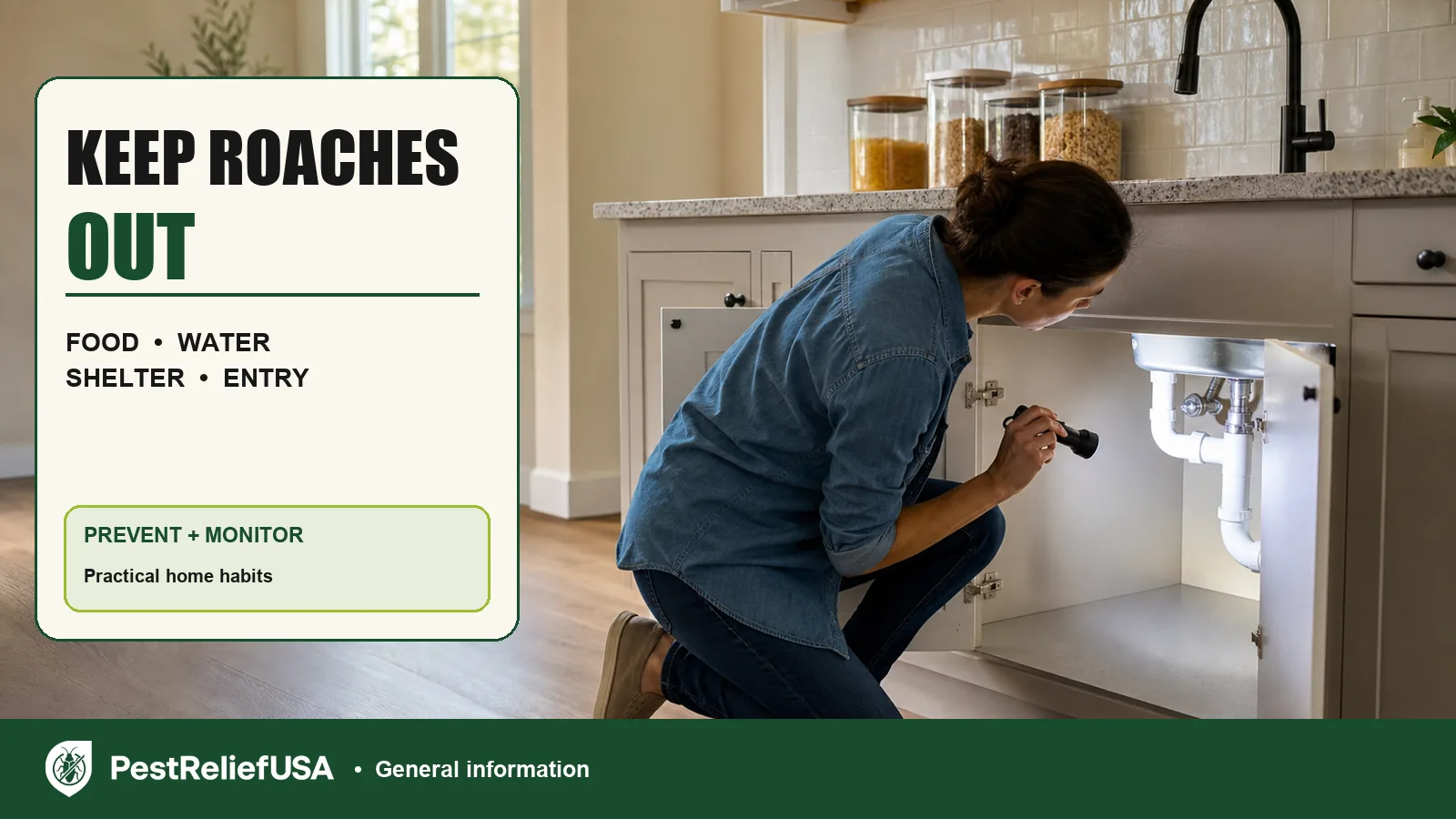
How to prevent cockroaches starts with four practical controls: reduce access to food and water, remove easy hiding places, close accessible entry routes, and monitor likely travel edges. These cockroach prevention tips explain how to keep cockroaches out of your home as far as ordinary maintenance can help, but they cannot guarantee that cockroaches will never enter.
A clean home can still receive an occasional cockroach in a box, bag, delivery, or used item. In apartments and other multi-unit buildings, activity may also move through shared utility routes. PestReliefUSA is an independent information and referral resource; it does not inspect properties, identify specimens, recommend property-specific treatment, apply pesticides, quote, schedule, or guarantee provider availability. See how the PestReliefUSA information and referral process works.
Quick Answer: A Four-Part Cockroach Prevention Plan
- Reduce food access. Clean crumbs, grease, and spills; store food securely; and manage trash and recycling.
- Reduce water access. Address leaks, standing water, and recurring condensation.
- Reduce shelter. Remove unnecessary cardboard, paper bags, and clutter from warm or damp areas.
- Limit entry routes. Maintain door sweeps and screens, inspect incoming items, and address accessible gaps in ways appropriate for the property.
After these steps, use monitoring traps at accessible wall-floor junctions and appliance edges to look for repeated activity. This prevention-and-monitoring sequence follows the general approach in the U.S. Environmental Protection Agency’s integrated pest management guidance: prevention, monitoring, and correct identification come before a control decision.
Why a Clean Home Can Still Have Cockroaches
Good sanitation removes resources but does not create a sealed environment. University of Minnesota Extension advises examining bags, boxes, and luggage brought into a home for cockroaches or egg capsules. UC Statewide IPM also distinguishes cockroaches that commonly live and reproduce indoors from outdoor species that may temporarily enter buildings.
One observation cannot establish the species, source, population size, or need for treatment. Prevention focuses on conditions you can change and helps make repeated activity easier to detect. If you have already found something suspicious, review the signs of a cockroach infestation to document before drawing a conclusion.
10 Practical Cockroach Prevention Tips
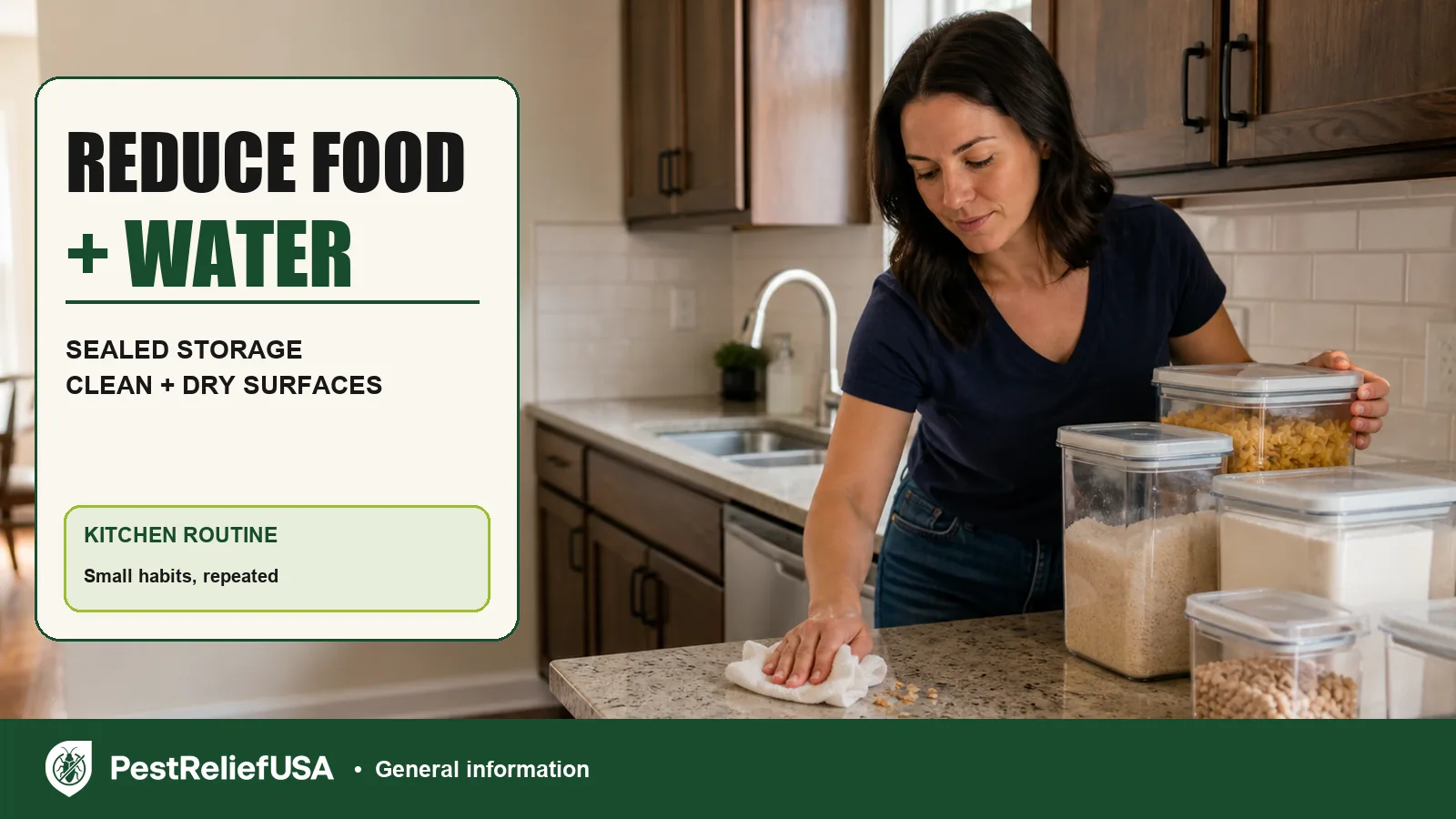
1. Clean Crumbs, Grease, and Spills
Small amounts of food debris can remain along counter seams, floor edges, and appliance sides after the obvious mess is gone. The EPA recommends cleaning spills and crumbs and washing dirty dishes as part of pest prevention.
- Wipe counters, stovetops, tables, and food-preparation areas after use.
- Sweep or vacuum edges and corners where debris collects.
- Clean behind or beneath appliances only when the area is safely accessible and the appliance manufacturer’s guidance permits movement.
2. Store Human and Pet Food Securely
Transfer opened pantry foods to sound containers with well-fitting lids. UC IPM recommends insect-proof containers such as glass jars or resealable plastic containers. Minnesota Extension also advises against leaving pet food and water bowls out overnight.
- Close or transfer cereal, flour, sugar, snacks, and pet food after opening.
- Clean food residue from container exteriors and pantry shelves.
- Use a routine that fits the household rather than relying on a one-time deep clean.
3. Manage Trash and Recycling
Keep household garbage in containers with well-fitting lids and avoid allowing food residue to build up in recycling. UC IPM recommends liners and tight-fitting lids and advises keeping trash containers away from doorways.
- Remove food waste on a regular household schedule.
- Rinse containers when practical and clean residue from bins.
- Break down shipping boxes after checking them and move them to the appropriate recycling or storage area.
4. Address Leaks and Recurring Moisture
Check safely accessible areas under sinks, around fixtures, and near water-using appliances for drips, standing water, or recurring condensation. UC IPM recommends eliminating plumbing leaks and other moisture sources and improving ventilation where condensation is a problem.
- Report or repair leaks through the appropriate owner, landlord, or qualified trade professional.
- Drain standing water and wipe wet work surfaces after use.
- Empty plant saucers or appliance trays when their instructions call for it.
5. Reduce Cardboard and Unnecessary Clutter
Piles of paper, corrugated boxes, and crowded storage can create protected hiding areas and make inspection or cleaning difficult. Boxes and stored goods can also transport cockroaches or egg cases into a home.
- Inspect and remove unneeded shipping boxes promptly.
- Use clean, durable storage containers where practical.
- Leave enough space to see and clean accessible shelf and floor edges.
6. Address Accessible Cracks and Utility Gaps
Openings around baseboards, plumbing, wiring, and cabinet backs may provide movement routes or protected spaces. Use materials and methods appropriate for the surface, utility type, building rules, fire safety requirements, and local code. Renters should report gaps and obtain permission before altering the property.
- Check visible gaps beneath sinks and around accessible pipe penetrations.
- Ask building maintenance or a qualified professional about gaps involving wiring, gas, fire-rated assemblies, or concealed spaces.
- Do not dismantle fixtures or enter wall voids to look for activity.
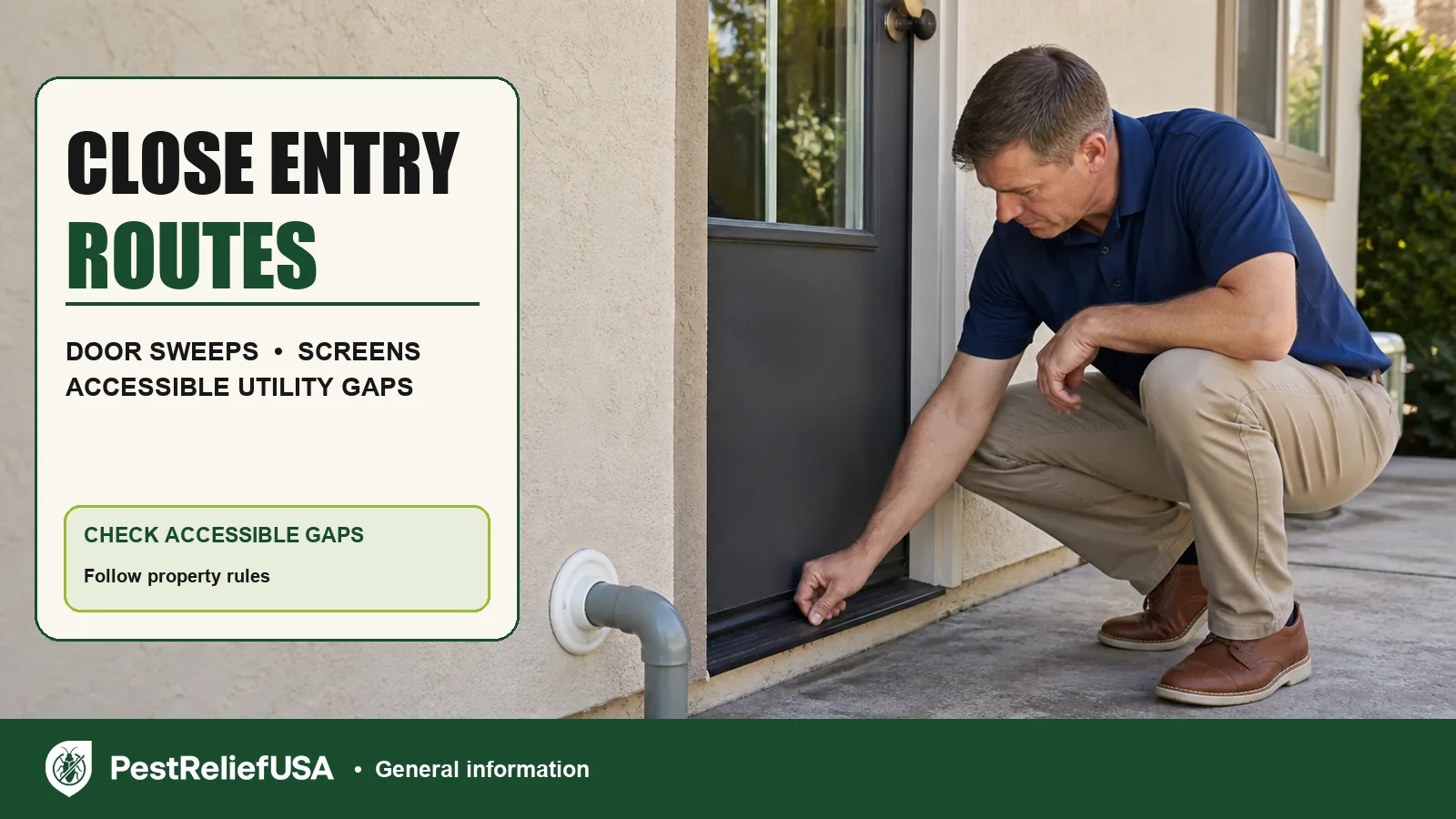
7. Maintain Door Sweeps, Weatherstripping, and Screens
UC IPM recommends door sweeps and weatherstripping to reduce entry, while the EPA advises repairing holes in door and window screens. Focus on components the property owner or tenant is permitted to maintain.
- Look for visible daylight beneath exterior doors and report a damaged sweep.
- Replace or request repair of worn weatherstripping.
- Repair torn window, door, or vent screens using the correct material.
8. Inspect Boxes, Bags, and Used Goods
Check incoming boxes, luggage, used furniture, appliances, and electronics before bringing them into living or storage areas. UC IPM advises looking for egg cases on furniture, appliance areas, and boxes; Minnesota Extension similarly recommends watching for cockroaches and egg capsules when packing or moving.
- Use good light and inspect seams, undersides, and packaging folds.
- Unpack in an appropriate area when practical and remove packaging promptly.
- Photograph a suspicious specimen or egg case before moving it if that can be done safely.
9. Reduce Outdoor Moisture and Harborage Near Entry Areas
Outdoor cockroach relevance varies by species, climate, and property. UC IPM recommends trimming dense vegetation near buildings, improving light and air movement, and moving stored materials such as firewood away from exterior walls.
- Correct outdoor leaks or irrigation overspray near entry areas.
- Avoid stacking lumber, debris, or firewood against the structure.
- Keep accessible vents and door approaches clear enough to inspect.
10. Monitor Accessible Edges
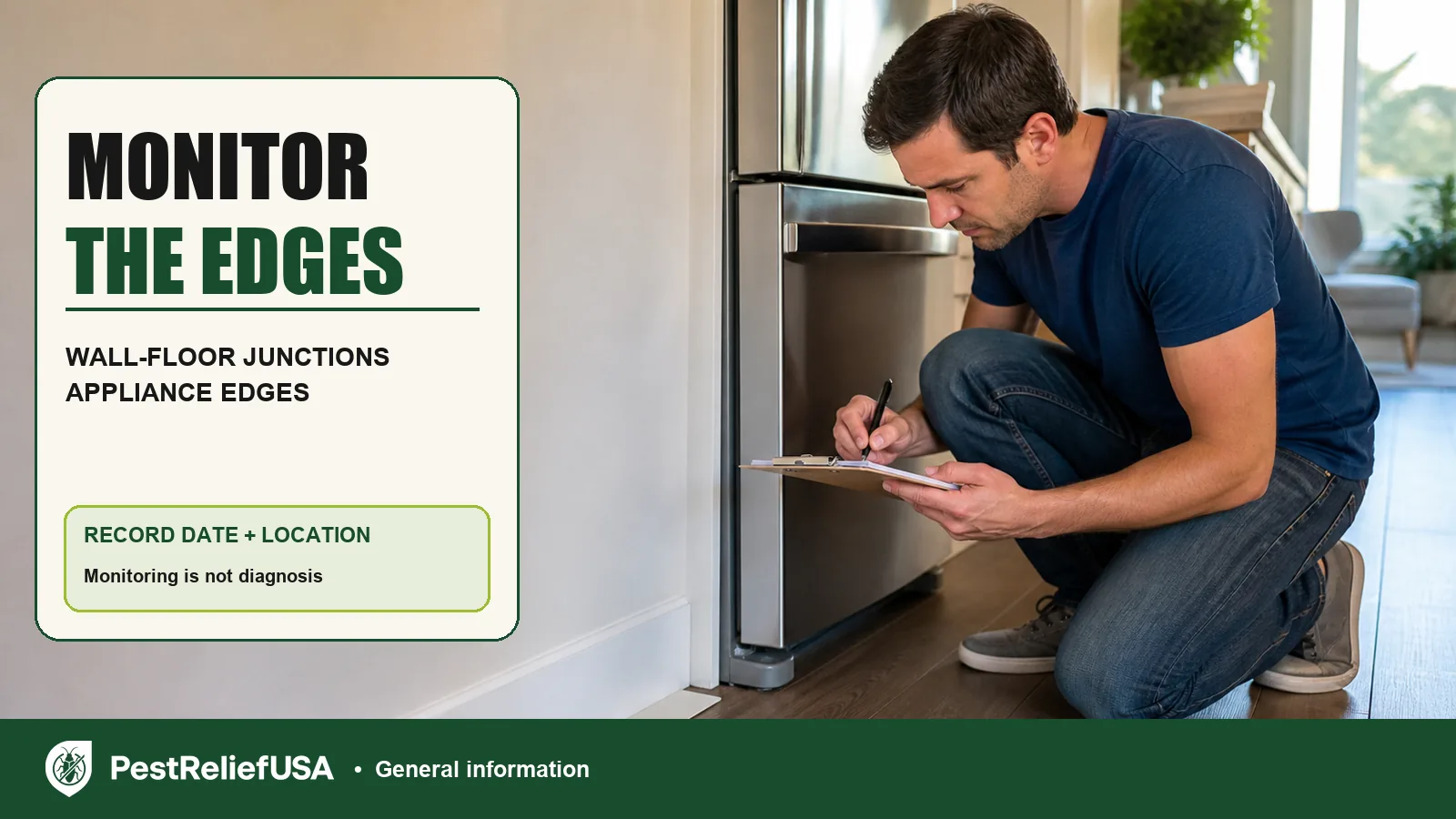
Sticky traps are monitoring tools, not a diagnosis or treatment. UC IPM recommends placing traps where cockroaches are likely to travel, including floor-wall junctions and areas near suspected activity.
- Place traps flush against accessible edges near kitchens, bathrooms, cabinets, or appliances.
- Keep them away from children, pets, food-contact surfaces, and wet areas, and follow the product label.
- Check them at a consistent interval and record the date, location, and result.
- Compare patterns across several checks instead of relying on one trap or one date.
Cockroach Prevention in Apartments and Multi-Unit Buildings
Sanitation, moisture management, exclusion, and monitoring still matter in an apartment, but the resident may not control adjacent units, shared walls, utility chases, or common areas. Minnesota Extension describes cockroach management in multi-unit housing as difficult because adjacent units may also need attention.
- Photograph observations and record dates, rooms, and monitoring locations.
- Report activity and building gaps to management in writing.
- Ask before sealing or altering plumbing, electrical, or structural components.
- Continue the food, moisture, clutter, and monitoring habits within your control.
The Centers for Disease Control and Prevention identifies cockroaches as a possible asthma trigger. Its guidance emphasizes reducing food and water sources, sealing cracks, and avoiding sprays and foggers around people with asthma because these products can trigger attacks.
What Prevention Cannot Establish
- It cannot identify a species. A clear specimen and qualified assessment may be needed.
- It cannot show the full extent or source. Visual observations and trap results may not reveal activity in hidden spaces or adjacent units.
- It cannot determine whether treatment is needed. That decision depends on the evidence, property, applicable rules, and an independent provider’s assessment.
- It cannot guarantee a cockroach-free home. Incoming items and shared building routes remain possible even when maintenance is careful.
When to Consider an Independent Assessment
Repeated captures, several types of evidence in one area, egg cases, or continued observations after basic maintenance may justify an assessment. Document first, then use the cockroach evidence guide to organize what you found. For general service context, read the cockroach-control information page; for broader maintenance, see pest prevention tips for homeowners.
If you choose to explore options, you can share property details and available next steps. Independent providers determine availability, identification, findings, recommendations, scope, treatment, pricing, scheduling, follow-up, warranties, and contract terms after their own assessment.
Sources and Editorial Review
Factual claims in this guide were reviewed on September 2, 2026 against guidance from the U.S. EPA, CDC, UC Statewide IPM Program, and University of Minnesota Extension. PestReliefUSA does not present pest-control companies as factual authorities and does not claim that this editorial review is a property inspection or professional diagnosis.
- U.S. EPA — Integrated Pest Management Principles
- U.S. EPA — Do You Really Need to Use a Pesticide?
- CDC — Controlling Asthma
- UC Statewide IPM Program — Cockroaches
- University of Minnesota Extension — Cockroaches
Frequently Asked Questions
Does seeing one cockroach mean I have an infestation?
Not necessarily. One observation cannot establish the species, source, or extent of activity. Record where and when you saw it, look for other evidence, and compare monitoring results over time. Repeated observations or several clues together provide more useful context than a single sighting.
Are cockroaches a health concern?
Cockroach allergens can be an indoor asthma trigger, according to the CDC. UC IPM also notes allergen and public-health concerns associated particularly with German cockroaches. Avoid diagnosing a health condition from pest evidence; contact a healthcare professional about individual symptoms or asthma management.
Can cockroaches come from a neighboring unit even if my home is clean?
It can happen. Shared walls, plumbing paths, utility penetrations, and common areas can connect parts of a multi-unit building. Keep documenting activity and maintaining your unit, but report recurring observations to building management because coordinated attention may be necessary.
Should I use bug spray or foggers as prevention?
This general prevention guide does not recommend routine preventive spraying. The CDC advises avoiding sprays and foggers around people with asthma because they can trigger attacks. The EPA’s IPM framework begins with prevention, monitoring, and correct identification. If a pesticide is considered, follow the product label and applicable law, and let an independent qualified provider determine any property-specific recommendation.