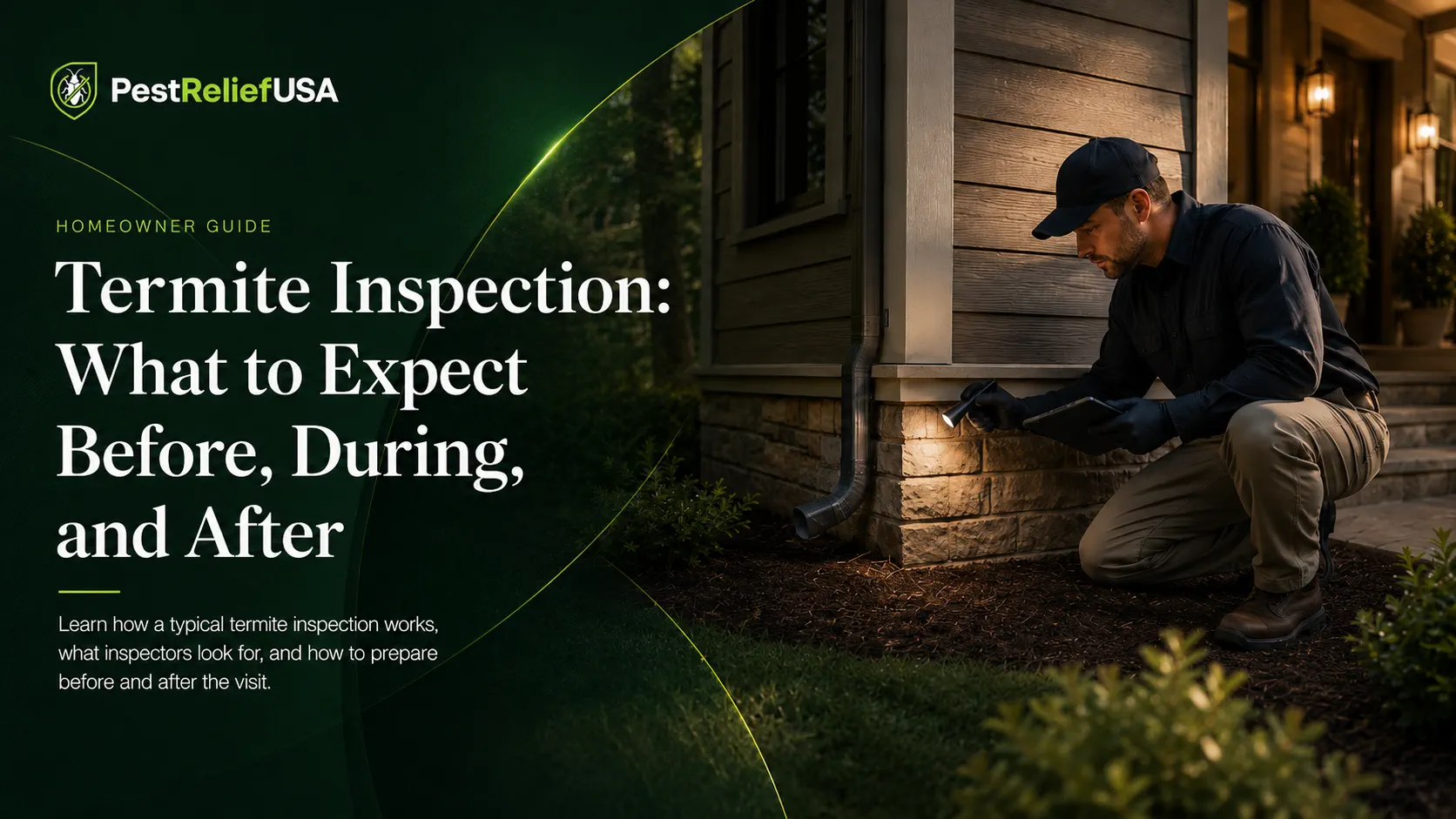
If you’ve noticed something unusual — a mud-like tube along a foundation wall, wood that sounds hollow when tapped, or wings scattered near a window — a termite inspection may be one of the first steps a pest management professional recommends. A termite inspection is a structured review of accessible areas of a property that may document signs suggesting termite activity, conditions that could support activity, or locations that warrant closer attention.
This guide explains what that process may look like, how to prepare, what questions to ask, and what an inspection can and cannot confirm. A termite inspection can help homeowners understand what is visible before they decide on any next step. PestReliefUSA is an information and referral resource. We do not perform inspections or treatments. Independent providers determine their own availability, inspection approach, findings, recommendations, scope, scheduling, pricing, warranties, and terms. Licensing requirements and verification processes are handled at the state level.
What a Termite Inspection May Involve
A termite inspection is primarily a visual assessment. An inspector may review accessible areas of the property — inside and outside — looking for observable evidence of termite activity or conditions that could support it. The scope and depth of any inspection depends on the provider, the property, what areas are safely accessible, and applicable state requirements.
According to the U.S. Environmental Protection Agency, termites rarely emerge from soil, mud tubes, or the food sources through which they tunnel, which means most people are unaware of an infestation until they see a swarm or discover damage. An inspection is designed to look for the indirect signs that point toward activity even when termites themselves are not visible.
After the visual review, many providers prepare a written report summarizing their findings, the areas examined, any conducive conditions noted, and — if activity is observed — what options may be available. The format, detail, and turnaround time for that report varies by provider.
Areas an Inspector May Review
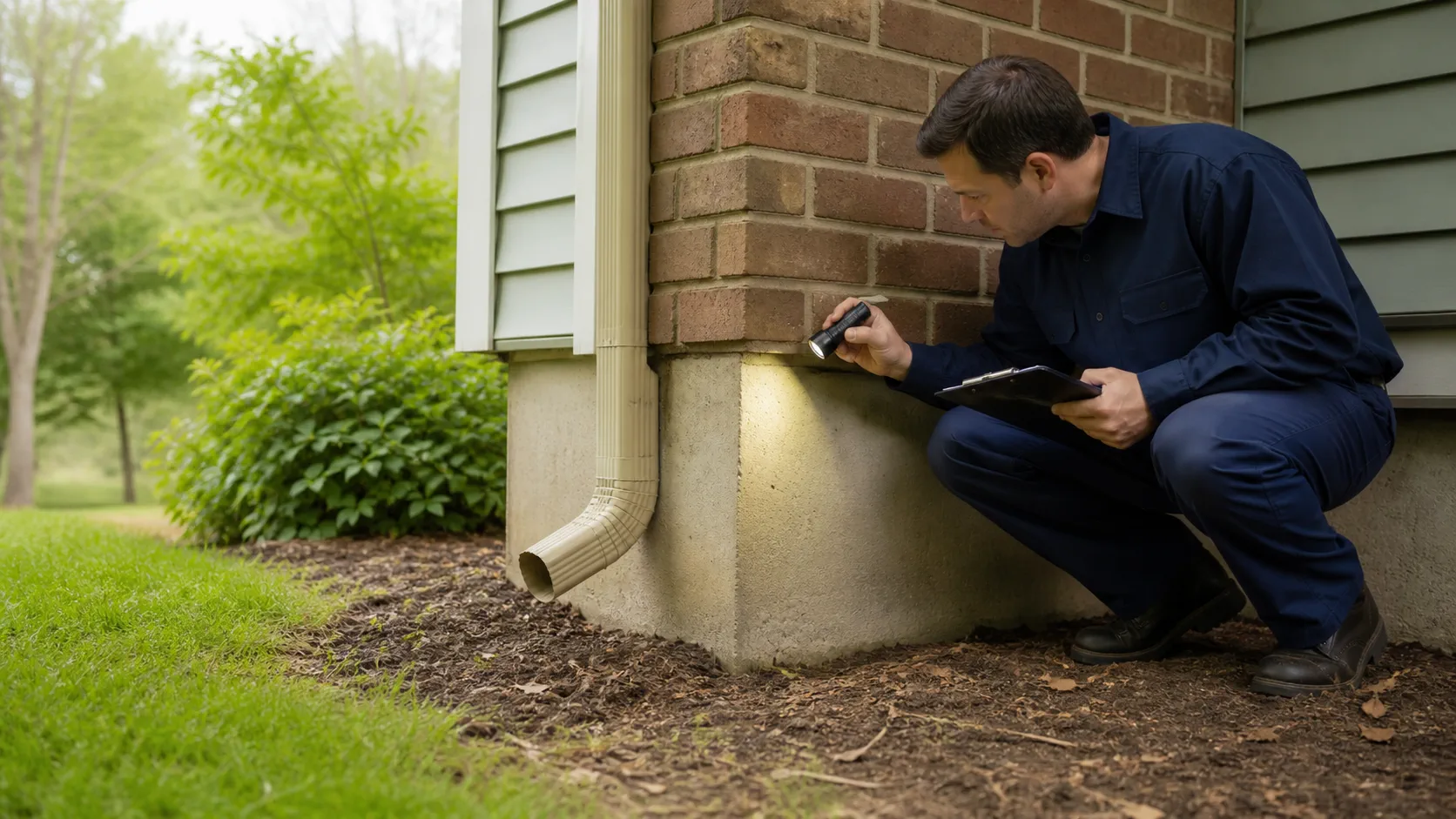
The specific areas covered depend on access, property construction, and the provider’s methodology. The following is a general outline of what may be examined — not a guaranteed checklist.
Exterior
- The perimeter of the foundation, including visible concrete, masonry, and any wood-to-soil contact points
- Exterior wood elements such as siding, window and door frames, fascia boards, and wooden decks or porches
- Visible mud tubes — pencil-width tunnels of soil and debris that subterranean termites may construct along surfaces to travel between the soil and wood
- Moisture sources and drainage patterns near the structure, including gutters, downspouts, and grading, since the EPA notes that keeping soil around the foundation dry through proper grading and drainage is a key prevention measure
- Wood storage, debris, or landscaping in close contact with the structure — the EPA advises against piling firewood or wood debris next to a home
Interior
- Accessible interior spaces, including basements, main living areas, and garages
- Visible wood surfaces, baseboards, window sills, door frames, and flooring
- Evidence of past moisture intrusion — staining, warping, or soft spots in walls or flooring
- Visible swarm evidence, such as discarded wings near windows or light sources (termite and ant swarms are sometimes confused; termites have wings of roughly equal length, while ant front wings are longer than hind wings)
Accessible Structural Areas
- Crawlspaces, where accessible and safe — inspectors may look at floor joists, support beams, pier posts, and any visible soil-to-wood contact
- Attic spaces, where accessible — visible rafters and sheathing may be reviewed
- Utility entry points where pipes or conduits pass through foundations or walls
Important limitation: Inspectors can only assess what is visible and safely accessible. Areas concealed behind walls, under permanent flooring, or in spaces that cannot be safely entered will generally not be reviewed. No visual inspection can confirm the full extent of an infestation or rule out activity in inaccessible areas.
Possible Signs and Property Conditions That May Be Documented
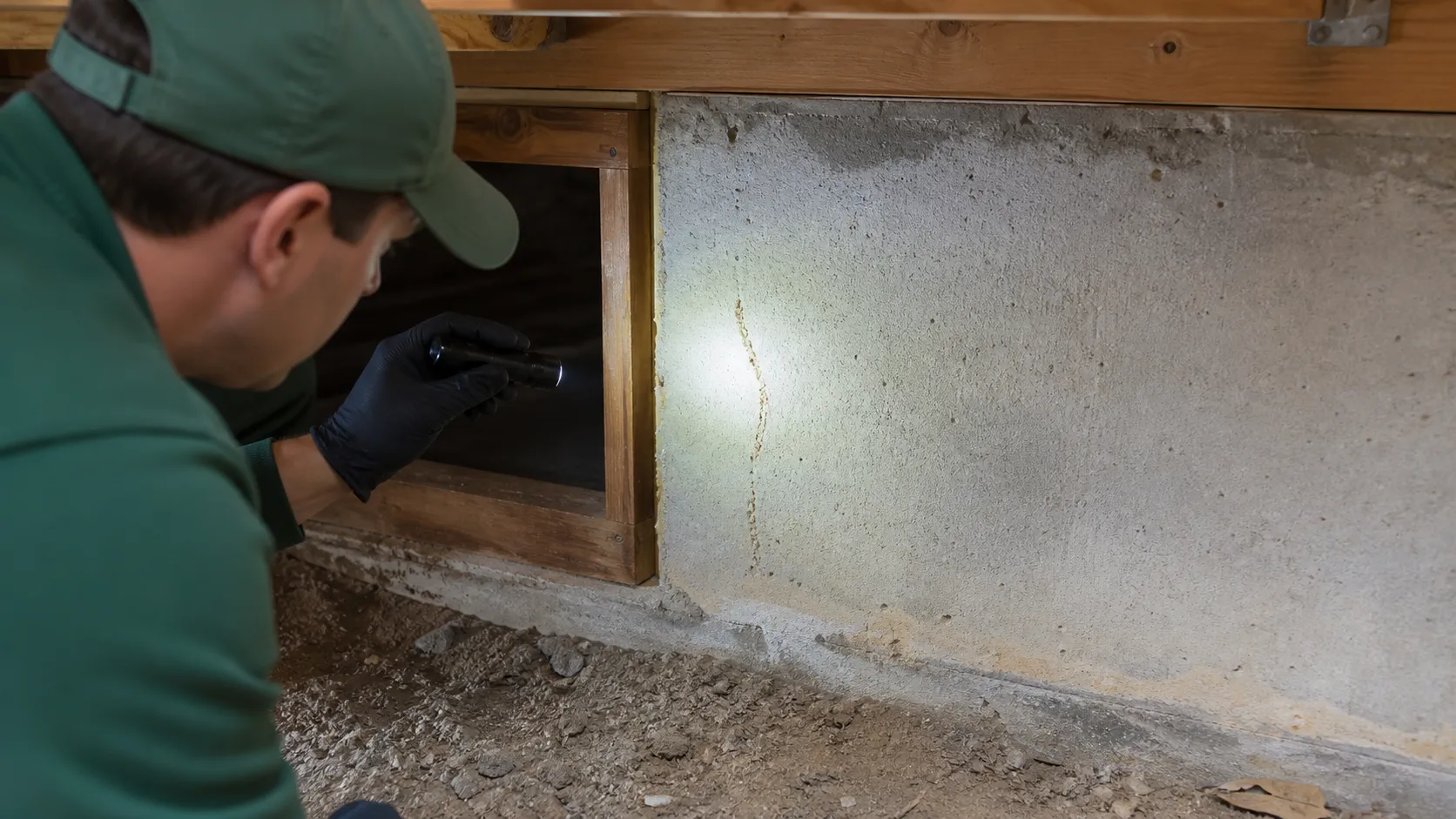
An inspector may note the following types of observable evidence or conditions, depending on what the property presents:
- Mud tubes — narrow, tube-like structures of soil, saliva, and debris that subterranean termites may build along exterior walls, foundation elements, or interior surfaces
- Wood damage consistent with termite feeding — wood that appears hollowed, honeycombed, or weakened along the grain; this may be checked by probing with a tool, though homeowners should not attempt to probe wood themselves
- Swarm evidence — discarded wings near windows, doors, or light sources, which can indicate a swarm occurred nearby
- Frass — pellet-like material that may be associated with drywood termite activity; UC IPM notes that expert help may be needed to distinguish termite pellets from other debris
- Conducive conditions — moisture intrusion, wood-to-soil contact, inadequate ventilation, or wood debris near the structure that may increase termite risk, regardless of whether active termites are currently present
For more on what damage or signs might look like before an inspection, see our guide on possible signs of termite damage.
How to Prepare for a Termite Inspection
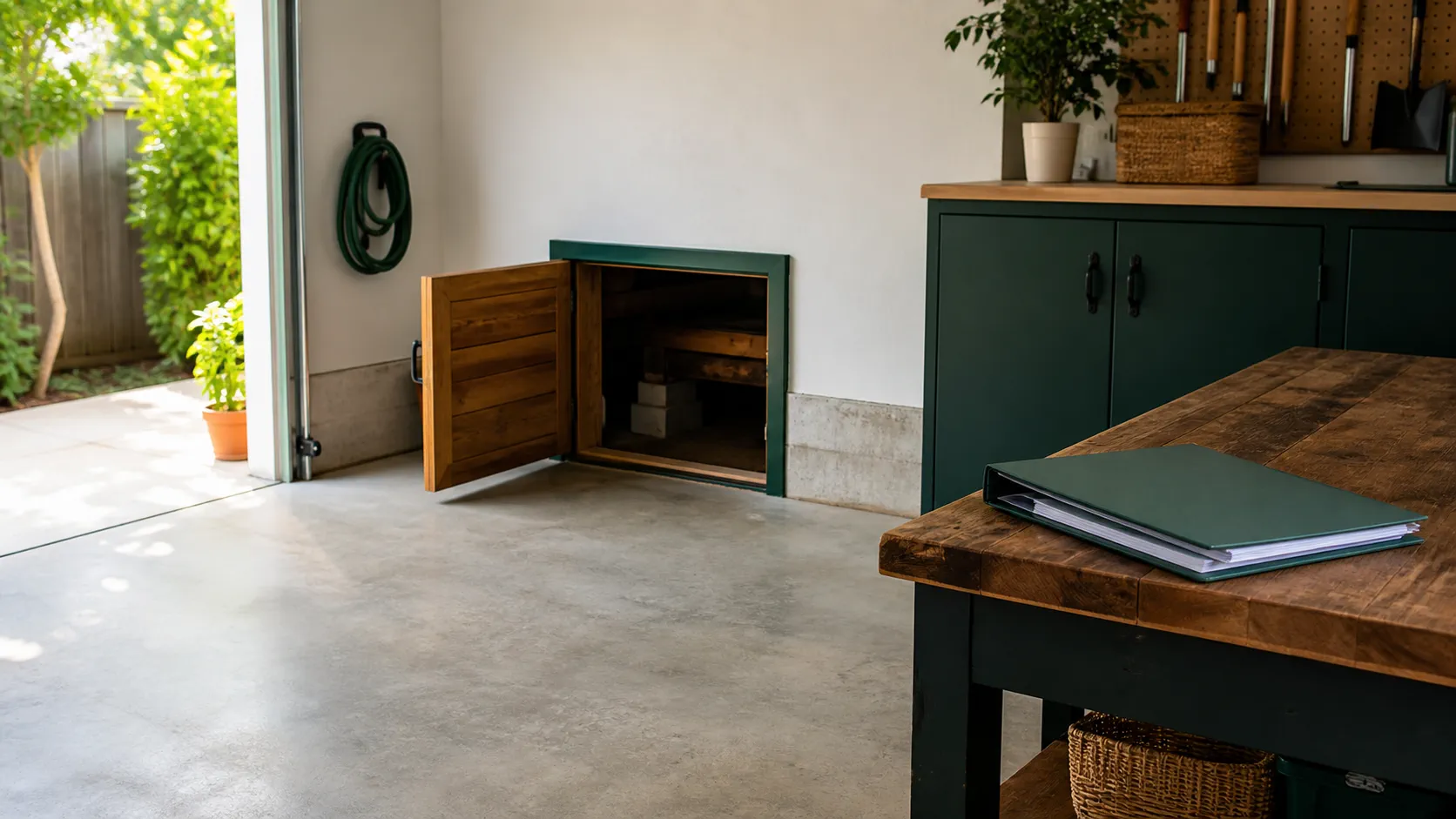
Preparing thoughtfully can help an inspection go more smoothly and give the provider more useful context. The following are safe, low-risk steps a homeowner can take:
- Clear access to key areas. Move stored items away from crawlspace hatches, basement walls, and garage perimeters so the inspector can reach those spaces without obstruction.
- Note what you’ve observed. Write down the location, approximate date, and description of anything that prompted your concern — a swarm, a mud tube, soft wood, or unusual insect activity. Photographs taken from a safe distance can be helpful context for the inspector.
- Note any recent changes. Recent water leaks, plumbing repairs, renovations, or landscaping changes near the foundation may be relevant.
- Confirm access to all relevant areas. If a gate is locked, an attic hatch is blocked, or a crawlspace requires a key, arrange access in advance.
- Ask in advance what the inspection covers. Different providers have different scopes. Confirming what areas will be examined — and any limitations — before the appointment sets appropriate expectations.
Do not attempt to probe, cut into, or disturb wood you suspect may be damaged. Leave suspect material undisturbed and ask the inspecting provider how it should be evaluated.
Questions to Ask About Findings, Scope, Pricing, and Warranty Terms
After an inspection, a thoughtful conversation with the provider can help you understand the findings and your options. Consider asking:
- What specific signs or conditions did you observe, and where exactly were they located?
- Which areas were inspected, and were there areas you could not access?
- Do the findings indicate active termite presence, past activity, or conducive conditions only?
- What treatment options, if any, are being recommended, and why?
- What does treatment involve — scope, preparation required, and timeline?
- What is the total cost, what does it include, and are there follow-up visits?
- Is a warranty offered? What does it cover, for how long, and under what conditions does it apply?
- Is the company licensed in this state? (The EPA advises that firms offering termite services must be licensed by your state, and recommends asking to see the company’s license.)
For broader context on what affects treatment expenses, see our resource on termite treatment cost factors.
What an Inspection Cannot Confirm or Guarantee
It is important to understand the limits of what a visual inspection can establish:
- An inspection cannot confirm the full extent of termite activity. Termites operate inside wood and underground; what is visible on the surface may represent only a portion of the actual situation.
- An inspection cannot rule out termites in areas that were not accessible or visible during the assessment.
- A finding of no visible evidence is not a guarantee that termites are absent — it means no observable signs were found at the time of the inspection in the areas reviewed.
- An inspection cannot predict future infestation. Conditions may change, and periodic inspections are often part of a long-term prevention approach.
- The findings, recommendations, scope, and any warranty terms are determined entirely by the independent provider — not by this website.
When to Consider Requesting Help
You may want to consider connecting with a local pest management professional if:
- You have observed mud tubes, discarded wings, or hollow-sounding wood in or around your home
- You are in the process of buying or selling a property and want an independent assessment
- You have had termite treatment in the past and want to confirm conditions have not changed
- You have noticed persistent moisture or wood-to-soil contact near the structure and want property-specific guidance
- You have noticed possible termite-related signs in more than one accessible area of the property
If any of these apply, record what you observed and consider discussing the property with an independent provider. PestReliefUSA does not confirm provider availability or create an appointment. Availability, inspection scope, and all service terms are determined by the provider.
To understand what professional intervention may involve, our termite-control information and local-help options page covers the general categories of treatment a licensed professional might discuss with you.
Frequently Asked Questions
How long does a termite inspection typically take?
Duration varies with property size and construction, the number of accessible areas, and the provider’s process. Ask the provider what its inspection is expected to cover and how much time it recommends allowing.
Do I need to be home during the inspection?
Whether a homeowner or authorized representative needs to be present depends on the provider and the access required. Confirm attendance, access, and preparation expectations directly with the provider when scheduling.
Is there a cost for a termite inspection?
Pricing varies by provider, property size, and region. Some providers charge a standalone inspection fee; others may offer an assessment as part of a broader service conversation. PestReliefUSA does not set or confirm pricing — that is determined entirely by the independent provider.
What is the difference between subterranean and drywood termites, and does it affect the inspection?
The most common termite in most of the United States is the native subterranean termite, which travels through soil and constructs mud tubes. Drywood termites — less common — live inside wood without soil contact and may leave different evidence such as frass (small pellet-like droppings). An inspector familiar with your region will be aware of which species are most relevant. The EPA’s termite resource provides useful background on species differences.
How often should a home be inspected for termites?
There is no single schedule that fits every property. The EPA recommends inspecting periodically as part of termite prevention, while the appropriate timing can depend on property conditions, construction, prior findings, and local context. Ask an independent provider what timing it recommends for the property.
Can I do a termite inspection myself?
Homeowners can safely note visible signs — mud tubes, discarded wings, discolored or soft wood — and photograph them for reference. However, evaluating structural elements or difficult-to-access spaces can involve safety and access limits that homeowners should not attempt to overcome. A homeowner observation can provide useful context, but it is not a substitute for an independent provider’s assessment.
A Final Note
A termite inspection is a starting point, not a definitive verdict. What an inspector observes — and how they interpret it — depends on what the property presents, what areas can be accessed, and the professional’s assessment. The right questions, asked before and after the inspection, help you understand both the findings and your options.
If you have observed something that concerns you, you can share the details of a termite concern for internal review. Submitting a request does not confirm provider availability, create an appointment, or guarantee a service. If referral routing becomes available, an independent provider will decide whether to respond and will set its own terms.