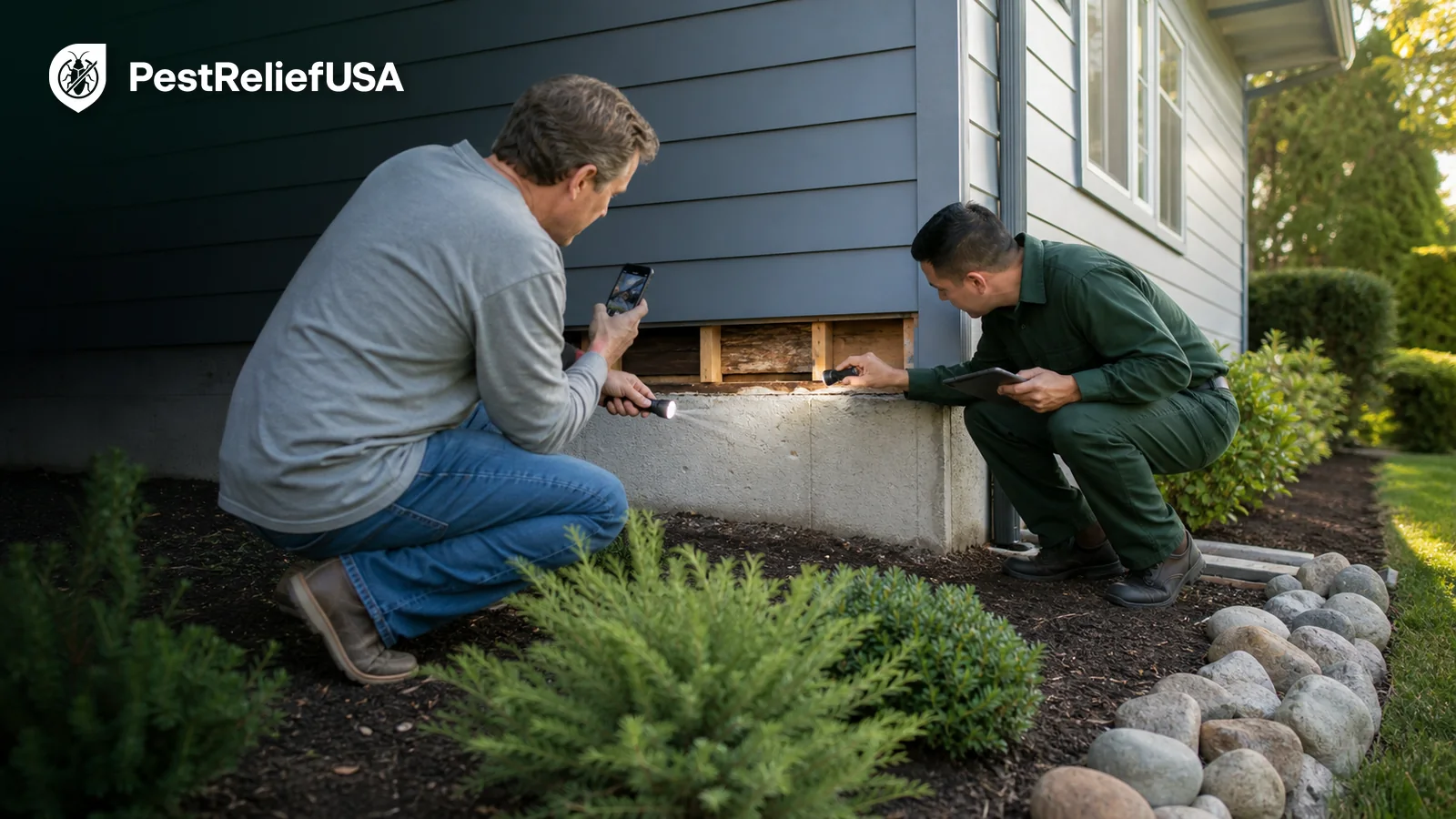
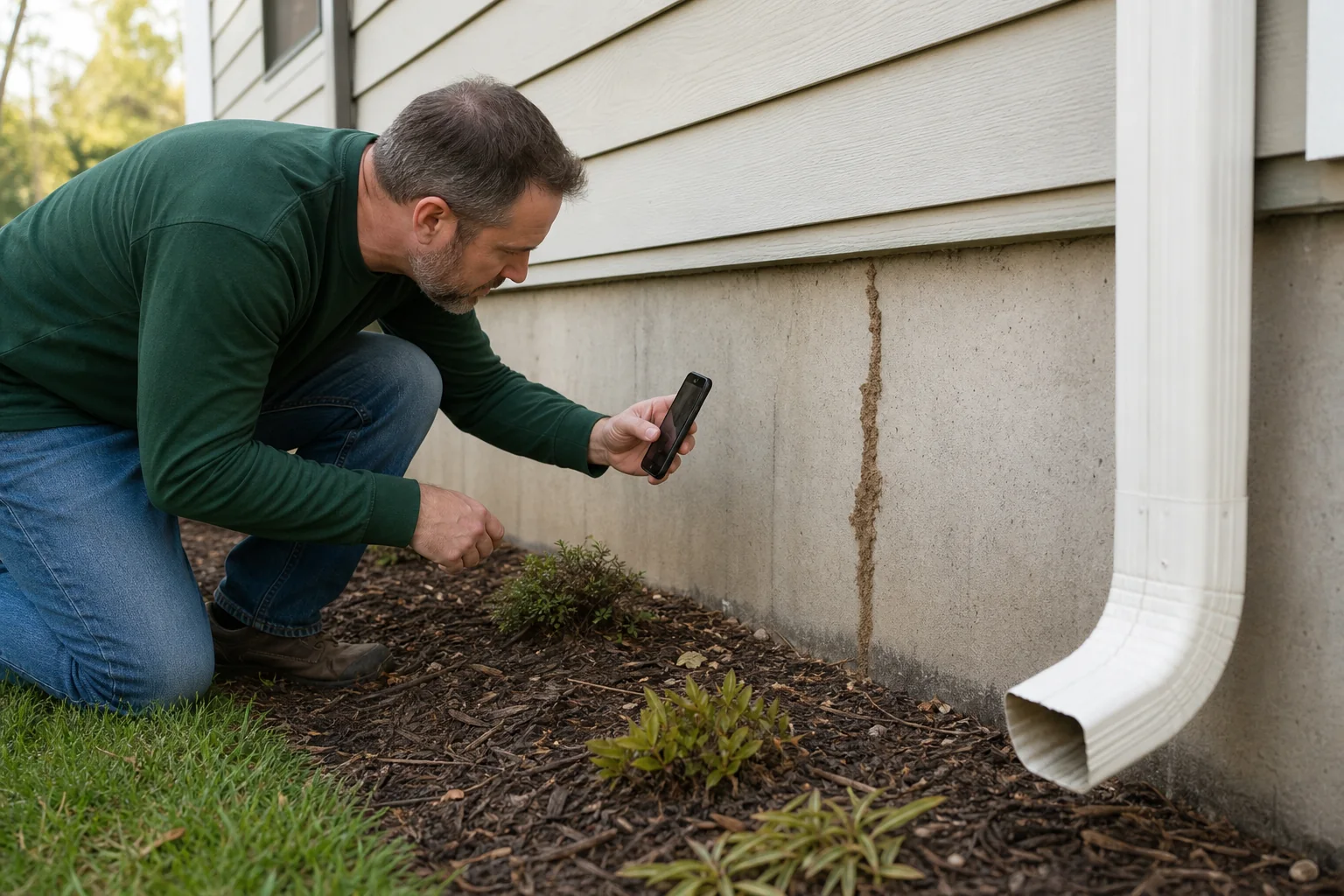
DIY termite treatment vs professional help is not simply a choice between buying a product and hiring a company. When homeowners spot a discarded wing, a mud tube on a foundation wall, or possible wood damage, the first questions are whether the evidence is actually termite-related and whether the situation calls for property-specific assessment.
The answer has two parts. Homeowners can document what they found, reduce moisture and wood-to-soil contact, and decide whether to request an inspection. Structural treatment is different: identification, access, product-label requirements, treatment scope, and follow-up depend on the property and the independent provider’s assessment.
This guide explains where DIY termite treatment ends and professional assessment may become useful, without diagnosing a property or recommending one treatment method.
Quick Answer: DIY Termite Steps or Professional Help?
Homeowners can safely document possible evidence and correct moisture or wood-to-soil conditions, but those steps do not confirm or treat an infestation.
When activity may involve the structure, identification is uncertain, access is limited, or pesticide use is being considered, a property-specific assessment is the more practical next step.
- Reasonable homeowner steps: take photos, note the location and date, correct leaks or drainage issues, and move stored wood away from the structure.
- Reasons to request an assessment: mud tubes, repeated swarmers, possible structural damage, inaccessible areas, or uncertainty about the pest or product label.
- What an assessment can clarify: accessible findings, limitations, proposed scope, follow-up, and written terms. The independent provider controls those details.
DIY Termite Treatment vs Professional Help: Start With the Goal
DIY termite prevention includes maintenance that can make a property less conducive to termites: managing moisture around the foundation, reducing wood-to-soil contact, storing firewood away from the house, and maintaining gutters and downspouts. These actions do not treat an infestation. The National Pesticide Information Center identifies reducing foundation moisture and keeping wood away from the home as practical prevention measures.
DIY termite treatment means trying to address active or suspected activity with a pesticide or another treatment product. Without property-specific findings, a homeowner may not know the termite type, possible access routes, areas involved, or whether a product is labeled for the intended structural use.
The question “can I treat termites myself?” is reasonable. A more useful follow-up is: Am I reducing conducive conditions, or trying to resolve suspected structural activity?
When a Homeowner Can Take Low-Risk Next Steps
Several non-treatment steps can help preserve useful information and reduce conducive conditions while you decide what to do next.
Document What You Found
Before disturbing the area, take clear photos of what you observed and its location. Note the date, room or exterior area, approximate size, nearby moisture, and visible wood contact.
Photos and location notes give an inspector something concrete to review. They cannot by themselves confirm a species, colony size, structural damage, or required treatment. See our guide to possible termite signs and damage to document, while remembering that documentation is not a diagnosis.
If it is safe and practical to do so, retain a found insect in a sealed clear container without handling it directly. A qualified inspector may be able to examine the sample along with the property evidence.
Reduce Moisture and Wood Contact
Low-risk property-maintenance steps may include:
- Checking that gutters and downspouts direct water away from the foundation
- Looking for soil or mulch against wood siding, framing, or posts and addressing the contact where practical
- Moving firewood, lumber, and wood debris away from the structure
- Checking for plumbing leaks, condensation, or standing water in basements and crawlspaces
These steps can reduce conducive conditions, but they do not establish whether termites are present or treat an existing infestation.
Use an Inspection to Clarify the Situation
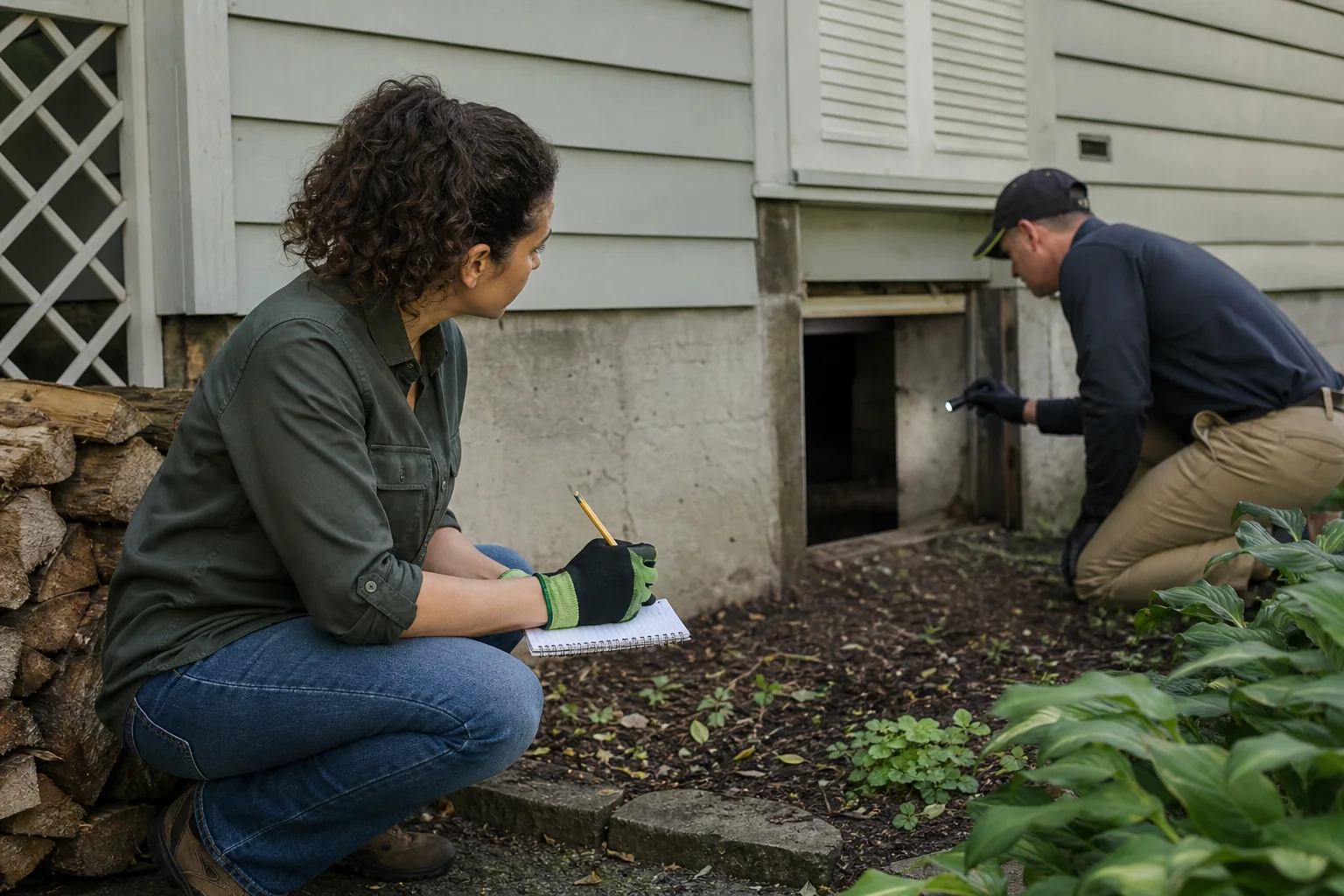
An inspection is an assessment of accessible areas, not a commitment to treatment. It may provide documented observations, identify access limitations, and support a written proposal when service is recommended.
Our guide explains what happens during a termite inspection. PestReliefUSA does not perform inspections. Independent providers determine availability, inspection scope, findings, recommendations, and any fees or terms.
Why Existing Termite Activity Is Different
Prevention and documentation can be homeowner tasks. Suspected structural activity raises different questions because identification, hidden access, product labels, and treatment scope are property-specific.
Identification and Access Are Site-Specific
Subterranean termites are the most common termite type in most of the United States. They live and travel through soil and may build mud tubes to reach wood above the soil line. Drywood termites are less common and more regionally distributed; they live in wood without soil contact. Winged termites can also be confused with winged ants.
A photo alone may not be enough to resolve those differences or establish where activity is occurring. The University of Georgia Cooperative Extension explains, in its regional guidance, that locating activity, selecting an intervention, and following up on an existing infestation are tasks suited to trained pest-management professionals.
Contact Kill Is Not Structural Protection
Some pesticide products claim to kill termites that directly contact the product. That claim does not mean the product has demonstrated protection of the structure or control of the whole infestation.
The U.S. EPA explains that products claiming only to kill termites have not demonstrated structural protection. EPA also warns that improperly conducted soil barrier treatments can contaminate a home or nearby drinking-water wells and fail to protect against termites.
Labels and State Rules Matter
Federal law requires registered pesticides to be used consistently with their labeling. EPA pesticide-label guidance also explains that some termiticide labels restrict use to people or firms licensed or registered by the state, and jurisdictions may impose additional requirements.
Read the product label before purchase or use, and consult the state structural-pest or pesticide regulatory agency when licensing or use restrictions are unclear. This article does not replace a product label or state requirements.
A Four-Question Check Before Choosing a Next Step
A practical DIY termite treatment vs professional decision starts with the information you have—not with a preferred product or treatment method. Ask these four questions before spending money or disturbing possible evidence.
1. Do You Know What the Evidence Is?
A single wing, damaged-looking board, or insect photo may suggest a direction, but it may not establish the pest, the extent of activity, or whether the evidence is current. If identification is uncertain, preserve photos and location notes and seek an assessment before treating the assumption as a confirmed infestation.
2. Is the Goal Maintenance or Structural Control?
Redirecting water, repairing a leak, and moving wood away from the house are maintenance steps. Trying to control insects inside or around a structure is a different goal. Keeping those goals separate helps prevent a moisture correction or contact-kill result from being mistaken for evidence that the structure is protected.
3. Can the Relevant Areas Be Assessed Safely?
Crawlspaces, utility penetrations, finished walls, attached garages, additions, and foundation transitions can limit what a homeowner can see. Do not enter an unsafe or inaccessible area simply to complete a DIY check. Record the limitation so an independent provider can explain whether and how it affects an inspection or proposed scope.
4. What Would Confirm That the Next Step Worked?
Before choosing any service or product, identify what follow-up would be meaningful. That may include documented observations, monitoring, a return visit, or other terms written into a proposal. Availability and follow-up vary, so ask the provider to state what is included rather than assuming a particular result or warranty.
When Professional Help Is the Practical Choice
Requesting an independent assessment is a practical option when:
- You observe mud tubes, discarded wings, hollow areas in exposed wood, or other possible signs of termite activity
- A previous inspection reported termites and treatment or follow-up is unresolved
- You are buying or selling a home and need property-specific information
- Important areas are inaccessible or you cannot determine where the evidence originated
- You used a retail product but still have concerns about possible activity
- You reduced conducive conditions but remain concerned about an active infestation
An assessment does not require you to accept a particular treatment or price. Review the documented observations, limitations, recommended scope, and written terms, and compare proposals when useful.
For more context, see our guide to termite-treatment cost factors and written quote comparison.
What to Ask an Independent Termite Provider
Before scheduling, consider asking:
- Is there an inspection fee, and how does it relate to any subsequent proposal?
- What areas will the inspection cover, and which areas may be inaccessible?
- Is the company licensed as required in this state, and where can I verify it?
After receiving a proposal, consider asking:
- What signs or conditions were observed, and where?
- Why is this treatment method being proposed for the property and construction type?
- What areas are included in the scope, and which are excluded?
- What follow-up, monitoring, or retreatment is included, if any?
- Are there renewal charges, warranty conditions, or repair exclusions?
- Which product labels and reentry instructions would apply?
These questions help compare findings, scope, follow-up, contract terms, and exclusions—not price alone. For a broader overview, see our termite-control and local-help options page.

Comparing DIY Costs With Professional Service Costs
A retail product’s purchase price covers the product, not an inspection, confirmed identification, property-specific scope, or follow-up. Its label may also limit where, how, or by whom it can be used.
A professional proposal may include an assessment, a defined treatment area or monitoring plan, follow-up, and contract terms. What is included varies by provider and property, so compare written scope and exclusions rather than assuming that every professional proposal includes the same services or warranty.
The useful comparison is not simply “cheap DIY” versus “expensive professional service.” Compare what each option is intended and legally permitted to accomplish, what evidence supports the proposed scope, and what follow-up is included. Independent providers determine pricing and terms after their own assessment.
Compare the Full Scope, Not Just the First Price
For a useful comparison, write down what each option actually includes. A retail purchase may include only the labeled product and its instructions. A professional proposal may include some combination of inspection findings, preparation requirements, treatment or monitoring areas, follow-up, renewal terms, and exclusions. None of those components should be assumed; they should be confirmed in writing.
Also compare what remains your responsibility. Examples may include repairing a leak, improving drainage, moving stored materials, providing access, or arranging separate repairs. These are not universal requirements, and PestReliefUSA cannot determine them for a property. The independent provider should explain its proposed scope, while the homeowner can ask questions and compare written terms before deciding.
Frequently Asked Questions
Can I use store-bought termite spray to treat my house?
A product may kill termites that directly contact it, but that does not demonstrate structural protection or control of the whole infestation. Whether a product can be used by a homeowner, and where it can be used, depends on its label and applicable state requirements. Do not rely on a general guide instead of the product label.
What is the difference between termite prevention and termite treatment?
Prevention reduces conducive conditions such as moisture near the foundation and wood-to-soil contact. Treatment attempts to address active or suspected infestation using a property-specific approach. EPA notes that termiticide application in most cases can only be properly performed by a trained pest-management professional; product labels and state requirements govern use.
If I removed a mud tube, does that mean the termites are gone?
No. Removing a visible tube does not establish that an infestation is gone or that the structure is protected. Record the location and date and share that information during an inspection rather than treating the removed tube as proof of control.
Is it useful to get more than one termite inspection estimate?
It can be. NPIC says that obtaining estimates, inspections, treatment information, and warranty details from multiple companies can help homeowners compare companies, pesticides, and methods. Compare written findings and scope as well as price.
What if I am not sure whether what I saw was a termite?
Document the insect or evidence and request identification before making a treatment decision. Winged ants are sometimes mistaken for termites, and a photo alone may not settle the identification. A qualified independent provider can assess accessible evidence on-site; its findings and recommendations remain its own.
A Practical Next Step
Reducing moisture, moving wood debris, and documenting evidence are reasonable first steps. Applying a pesticide to visible insects is a different action with product-specific limitations and legal requirements, and it may not address suspected structural activity.
If you observed possible termite activity, an independent inspection can provide documented observations and a proposal to evaluate. It is still your choice whether to accept the proposed service.
You can share your property details and explore available next steps. PestReliefUSA is an independent information and referral resource: it does not inspect, diagnose, treat, quote, schedule, or guarantee provider availability. Independent providers determine availability, findings, recommendations, scope, pricing, scheduling, follow-up, warranty, and contract terms.
Sources and Editorial Review
This guide was reviewed by the PestReliefUSA Editorial Team on August 30, 2026. Its safety and decision-support statements were checked against the following public resources:
- U.S. Environmental Protection Agency: Termites—How to Identify and Control Them
- U.S. Environmental Protection Agency: Pesticide Labeling Questions and Answers
- National Pesticide Information Center: Termites
- University of Georgia Cooperative Extension: Insect and Arthropod Pests of Southeastern Neighborhoods
Sources provide general education, not a diagnosis for any property. Product labels, state requirements, site conditions, and an independent provider’s written findings govern property-specific decisions.
Contact PestReliefUSA
Questions about this guide or the PestReliefUSA referral process can be sent to [email protected]. You can also follow PestReliefUSA on Facebook for homeowner education and website updates.
Email and social messages are not inspections, diagnoses, quotes, or emergency services. For property-specific assistance, use the Get Help form so the appropriate details can be collected. Any independent provider contacted through the resource determines its own availability, assessment, recommendations, pricing, warranty, and contract terms.