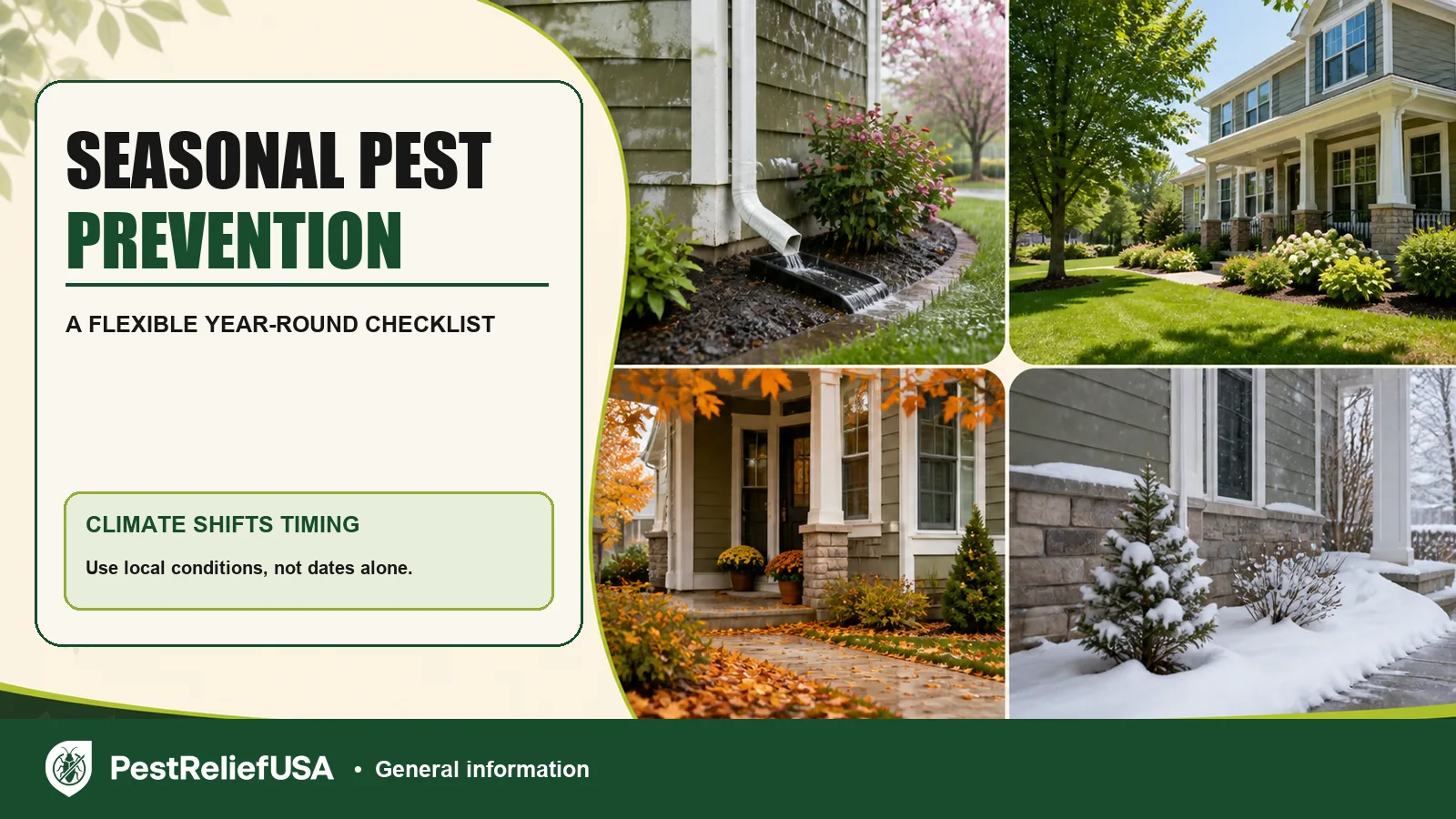
Seasonal pest prevention works best as a flexible property-maintenance calendar, not a universal list of pests by month. Spring is useful for moisture and exterior inspection, summer for food and standing-water control, fall for exclusion before overwintering activity, and winter for indoor monitoring and repair planning. Climate, elevation, construction, and local species can shift every timeline.
This U.S. homeowner guide organizes routine checks by season while preserving regional caveats. PestReliefUSA provides general information and referrals; independent providers determine identification, findings, availability, recommendations, scope, treatment, scheduling, pricing, follow-up, warranty, and contract terms.
Quick seasonal pest prevention calendar
- Spring: inspect drainage, leaks, screens, foundation visibility, and winter damage.
- Summer: manage food, trash, standing water, vegetation, travel, and outdoor activity zones.
- Fall: repair entry gaps, door sweeps, screens, storage, and sheltered exterior routes.
- Winter: monitor indoor evidence, attics and utility areas, review records, and plan repairs.
The EPA’s Integrated Pest Management principles support monitoring, accurate identification, prevention, and selection of controls based on evidence. Seasonal reminders make those tasks repeatable; they do not predict exactly which pest will appear.

Spring: inspect moisture, access, and winter damage
Check drainage and water pathways
Inspect gutters, downspouts, grading, hose connections, irrigation, crawlspace entrances, and accessible plumbing. Correct standing water and leaks using appropriate building or landscape help. Moisture may support several pests, but it is a condition—not an identification.
Repair screens and weather-damaged openings
Check window screens, door sweeps, garage corners, vents, soffits, siding transitions, and utility penetrations. Do not seal drainage or ventilation openings without using an appropriate pest-resistant detail.
Restore visible inspection paths
Trim vegetation that blocks exterior observation, move unnecessary debris, and keep foundation and door edges visible where practical. Preserve beneficial habitat away from critical building access rather than clearing an entire landscape.
Summer: control food, waste, water, and travel-related risks
Reduce standing water
Check buckets, plant saucers, covers, toys, gutters, birdbaths, and other containers according to local mosquito guidance. Rainfall and irrigation patterns vary, so inspect after water accumulates rather than relying on a fixed weekly assumption.
Manage outdoor food and waste
Clean grills and dining areas, use fitting trash lids, manage compost, pick up fallen produce, and store pet food securely. These steps reduce resources but do not eliminate every outdoor insect or animal.
Document travel and delivery evidence
Inspect luggage and used furniture before moving them through a home. Keep suspicious items isolated while identifying evidence. If bed bugs are suspected, follow the site’s safe bed bug first steps rather than moving belongings between rooms.
Fall: focus on exclusion and sheltered routes
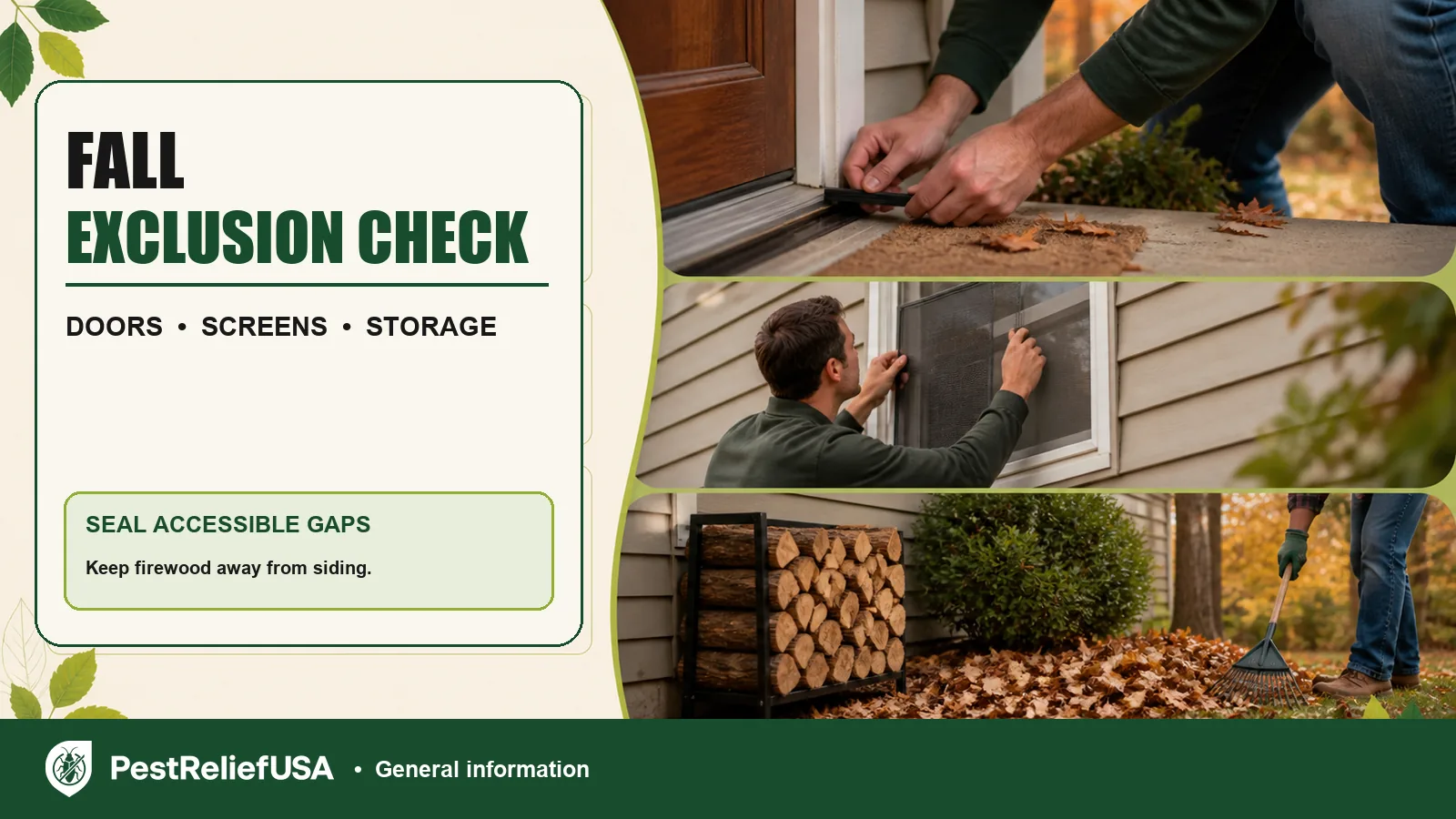
Complete exterior sealing before cold-weather sheltering
Many nuisance insects seek protected building spaces as conditions change, but timing differs by species and region. Penn State Extension notes, for example, that cluster flies gather on sunny building exteriors in fall and may use wall voids for winter shelter. This regional example should not be treated as a nationwide calendar for every pest.
Inspect doors, garages, roof edges, and utility gaps
Replace worn sweeps, repair screens, and document gaps before sealing. Consider whether animals may still be inside and whether an opening supports ventilation, drainage, or utilities.
Organize storage
Rotate stored goods, reduce long-undisturbed cardboard, protect food and seed, and create visible inspection lanes in garages, basements, and utility rooms. Do not disturb suspected rodent contamination or wildlife nesting material without appropriate guidance.
Winter: monitor indoor evidence and plan repairs
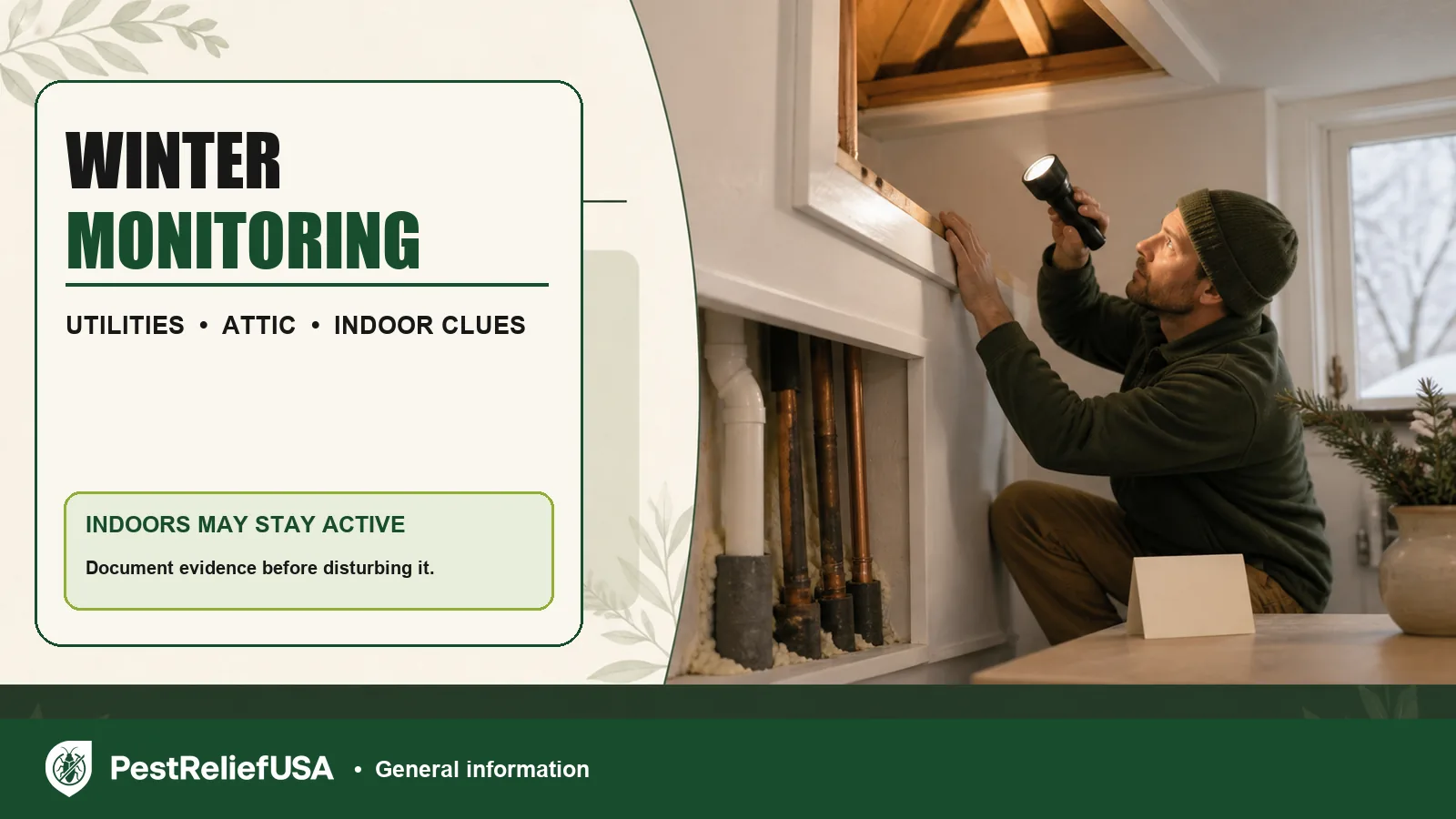
Check warm, quiet, and utility-adjacent areas
Inspect accessible cabinets, appliance edges, laundry zones, utility rooms, attic access, basements, and garages. Record droppings, gnawing, shed material, webbing, sounds, or odors without assigning a species from one clue.
Review moisture and indoor plant conditions
Condensation, leaks, overwatered potting mix, and stored organic material can support indoor problems during cooler months. Correct the condition and identify the organism before selecting a response.
Use records to plan spring work
Compare photos, dates, locations, repairs, and recurring evidence. A winter review can reveal which exterior zones need attention once weather and access allow.
Regional and climate caveats
The same month can mean snow, heavy rain, drought, or warm weather in different parts of the United States. Termite swarms, mosquito activity, overwintering insects, rodents, and outdoor ants do not follow one national schedule. Use state or local Extension and public-health guidance for timing-sensitive concerns.
Extreme weather can also disrupt ordinary patterns. Inspect after flooding, wildfire-related displacement, prolonged heat, freezes, storms, or construction changes, while following local safety instructions.
How this guide differs from an evergreen prevention checklist
This article organizes work by time of year. The separate home pest prevention checklist organizes ongoing tasks by food, water, access, storage, and property zone. Use the checklist for routine maintenance and this calendar for seasonal reminders.
When seasonal maintenance is not enough
Persistent sightings, extensive contamination, unsafe access, structural or wiring damage, or recurring evidence after maintenance may justify independent evaluation. Review common pest evidence or submit non-urgent details through Get Help. Provider participation and availability vary.
Frequently asked questions
What season is worst for household pests?
There is no single national answer. Pest activity depends on species, climate, building conditions, weather, and region. Use local evidence and Extension guidance.
When should exterior gaps be repaired?
Repair known, appropriate entry gaps as routine maintenance. Fall is a useful reminder in many climates, but do not wait if active access or weather damage is already visible.
Do pests disappear in winter?
No. Some become less visible outdoors, some overwinter in buildings, and others remain active indoors. Continue monitoring accessible areas.
Should a home be sprayed every season?
Not automatically. EPA IPM guidance supports monitoring and identification before control. Routine pesticide use without evidence or a defined need may add unnecessary exposure.
Can seasonal prevention guarantee no infestations?
No. It can reduce conducive conditions and improve early detection, but travel, deliveries, neighboring properties, wildlife, construction, and concealed access can still introduce pests.
Bottom line
Use spring for moisture and access inspection, summer for food and standing-water management, fall for exclusion, and winter for indoor monitoring and planning. Adjust the calendar to local climate and evidence rather than assuming every pest follows the same national season.