
Learning how to prevent termites starts with reducing conditions that can make access and activity easier: persistent moisture, wood touching soil, blocked ventilation, and concealed areas near the foundation. These steps cannot prove that a home is termite-free or eliminate an active infestation, but they can support practical maintenance and make changes around the property easier to notice.
Termite prevention is not a single product or one-time task. It is a set of ordinary maintenance habits that reduces moisture, limits direct access to wood, and keeps important parts of the foundation visible. No checklist can guarantee that termites will never become a concern, and regional termite pressure, termite species, and construction details vary.
This guide covers eight low-risk steps that many homeowners can take or arrange. If you find something that suggests possible activity rather than a maintenance issue, document what you observed and seek an appropriate assessment instead of attempting treatment. Our guide explains why prevention is different from an active-treatment decision.
What Termite Prevention Can and Cannot Do
What it can do: reduce conditions that may make termite access or activity easier. Managed drainage, separation between soil and structural wood, clear vents, and visible foundation edges all make routine property checks more useful. These habits are especially relevant to subterranean termites, which commonly maintain contact with soil and moisture.
What it cannot do: confirm that termites are absent, eliminate an existing infestation, or determine which treatment—if any—is appropriate. The U.S. Environmental Protection Agency notes that termites rarely emerge from the soil, mud tubes, or food sources through which they tunnel. A lack of visible insects therefore should not be treated as proof that a property is termite-free.
Property construction and local conditions also matter. A slab foundation, basement, vented crawl space, or sealed crawl space can present different maintenance questions. When you are unsure what applies to your home, an independent provider can assess accessible areas and explain findings, recommendations, scope, pricing, follow-up, warranty, and contract terms based on its own inspection.
How to Prevent Termites: 8 Practical Steps Around the Home
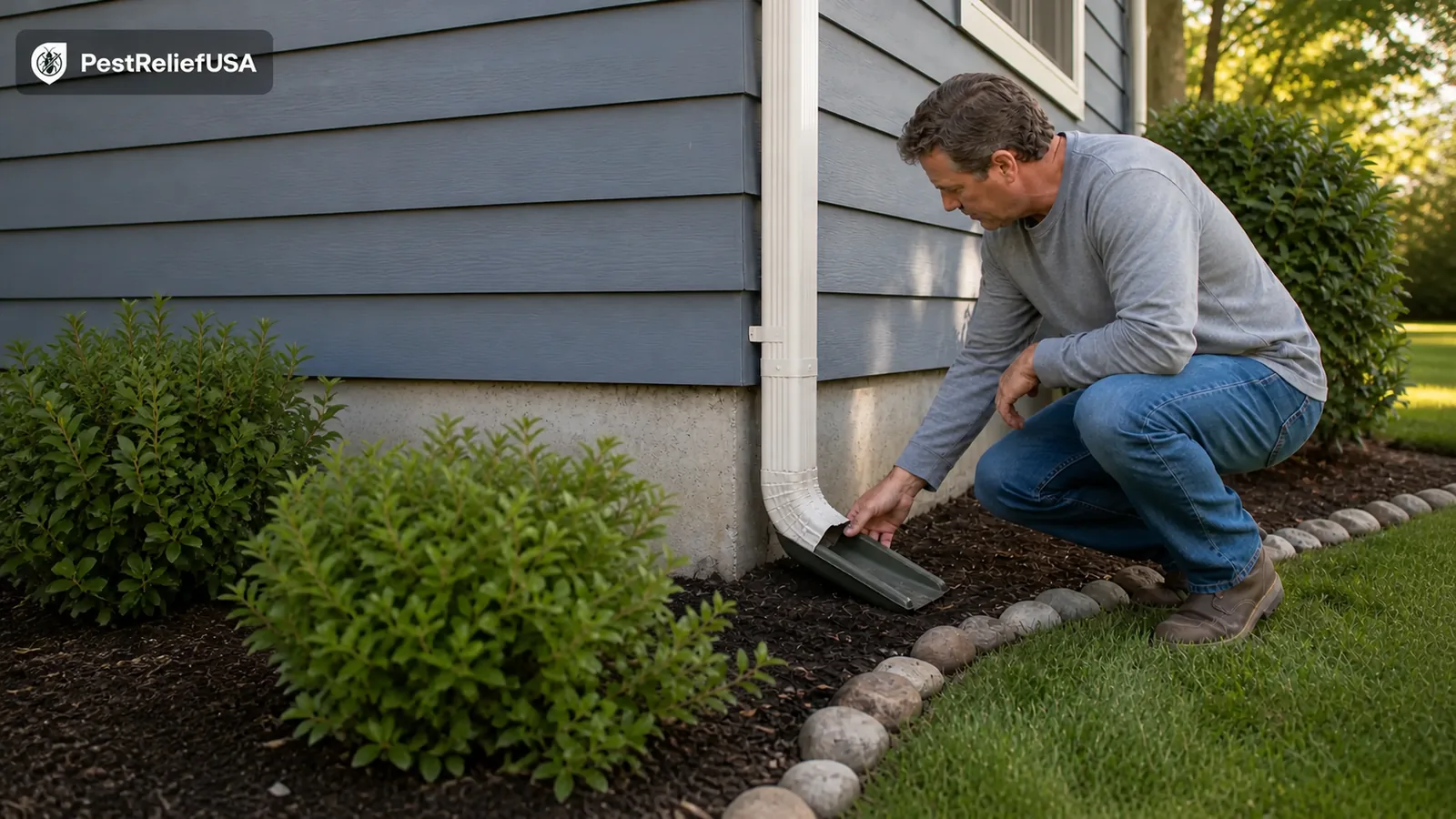
1. Keep Water Moving Away From the Foundation
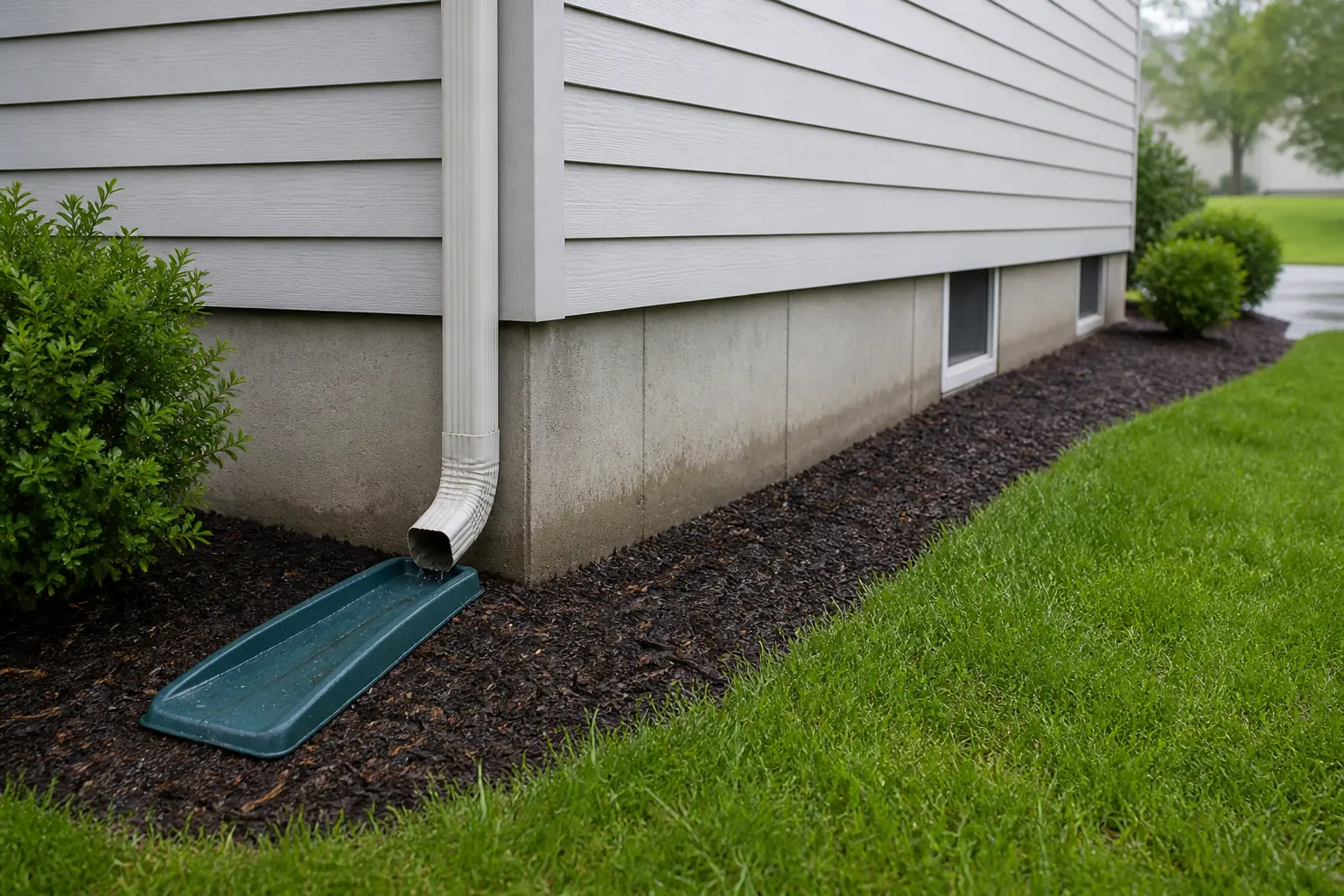
Start with the way rainwater moves around the house. The EPA identifies grading, gutters, and downspout drainage as termite-prevention measures. When water repeatedly collects next to a foundation, the nearby soil can remain consistently moist, creating a condition associated with subterranean termite activity. The University of Kentucky Department of Entomology similarly recommends functioning gutters, downspouts, and splash blocks, along with ground that slopes so surface water drains away from the building.
Practical steps include:
- Check whether the soil grade carries surface water away from the foundation rather than toward it.
- Make sure downspouts discharge away from the foundation and follow the drainage pattern appropriate for the property.
- Clear gutters so water flows through the system instead of overflowing beside the house.
- After heavy rain, note where water stands or soil remains saturated and consider whether drainage maintenance or professional advice is needed.
2. Repair Leaks and Address Damp Areas
Rain is not the only source of persistent moisture. The National Pesticide Information Center recommends repairing leaking pipes, faucets, and air-conditioning equipment, diverting rainwater away from the home, and keeping crawl spaces dry. Slow plumbing leaks, HVAC condensation, and standing water in a crawl space or basement can create localized damp areas that are easy to overlook.
Practical steps include:
- Look under sinks and around toilets, water heaters, visible pipes, and HVAC equipment for leaks or staining.
- Check safely accessible crawl-space or basement areas for standing water or persistent dampness.
- Note condensation on pipes or ductwork that repeatedly wets nearby materials.
- If moisture persists, address the source and obtain building or moisture-management guidance appropriate to the home’s construction.
3. Avoid Direct Wood-to-Soil Contact
Subterranean termites typically live in soil. Direct contact between soil and wood components can give them concealed access to food, moisture, and shelter. University of Kentucky guidance recommends keeping wood siding, door frames, and window frames at least six inches above ground level and explains that pressure-treated wood can still be vulnerable through cracks, cut ends, or surface tunnels.
Practical steps include:
- Look for soil or mulch that has accumulated against wood siding, trim, framing, or sheathing.
- Review deck posts, porch supports, lattice, steps, and similar wood components that meet the ground.
- Do not assume that pressure-treated wood removes every termite concern.
- If changing a structural support or grade is necessary, use an appropriately qualified building professional rather than altering it without guidance.
4. Store Firewood and Remove Wood Debris Near the House
Wood stored against a foundation can provide food, moisture, shelter, and concealed access. The EPA advises against piling firewood or wood debris next to a house. NPIC recommends storing firewood several feet away from buildings and off the ground, while University of Kentucky guidance also warns against storing firewood or wood debris against foundations or inside crawl spaces.
Practical steps include:
- Where practical, store firewood several feet from the building and raise it off the ground.
- Remove wood scraps, discarded lumber, cardboard, and construction debris from foundation and crawl-space areas.
- Check beneath decks and porches for form boards, stumps, roots, or wood debris left near the structure.
- If stored wood shows possible insect activity, avoid treating that observation as a diagnosis of the house; document it and seek identification when appropriate.
5. Keep Foundation Vents and Crawl Spaces Clear
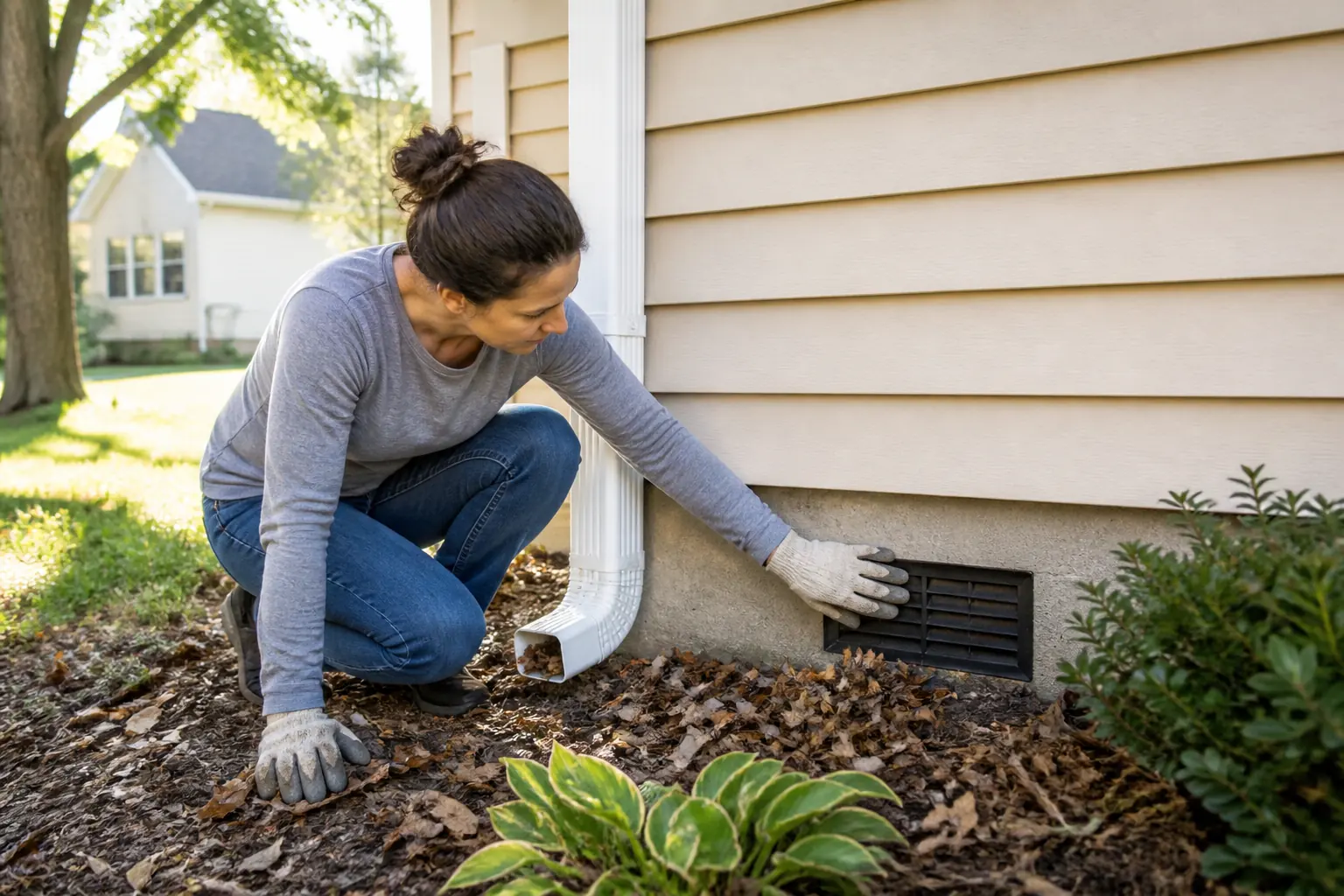
A wet crawl space can create conditions conducive to termites. For homes designed with foundation vents, leaves, soil, mulch, stored items, and vegetation should not block airflow or visibility. University of Kentucky guidance says vents should be kept free of leaves, dirt, and debris and should not be obstructed by vegetation.
Practical steps include:
- Check that foundation vents are visible and not covered by soil, mulch, plants, or stored objects.
- Look for damaged vent screens and other maintenance issues without opening or altering structural areas.
- Where a crawl-space moisture system or vapor barrier already exists, check for obvious displacement or damage.
- Because vented and sealed crawl spaces are managed differently, follow guidance appropriate to the home’s design and climate.
6. Manage Plants and Mulch Near Exposed Wood
Dense vegetation and heavy ground cover can retain moisture and obscure the foundation perimeter. The EPA recommends keeping vents clear and preventing trees and shrubs from growing against exposed wood. NC State Extension advises keeping mulch from touching the foundation or lowest siding because thick coverage can allow possible activity to remain concealed.
Practical steps include:
- Trim shrubs and ground cover so the foundation edge and vents remain visible.
- Avoid piling mulch against the foundation or wood siding.
- Use mulch sparingly near the structure and maintain the clearance needed to inspect the perimeter.
- Recheck plant clearance as shrubs and vines mature rather than relying on their original planting distance.
7. Reduce Obvious Foundation and Utility Openings
The EPA includes filling cracks in cement foundations and openings around utility passages among its prevention measures. Sealing an obvious gap is only one maintenance layer; it does not prove termites cannot enter elsewhere and does not replace moisture or wood-contact management.
Practical steps include:
- Look around visible plumbing, electrical, gas, cable, and other utility penetrations for unfinished gaps.
- Note foundation cracks, particularly when they change over time or appear alongside a moisture concern.
- Review visible joints where decks, porches, or additions meet the main structure.
- Use materials and repair methods appropriate to the construction; obtain qualified advice for structural movement, large cracks, or uncertain conditions.
8. Inspect Periodically and Keep Records
Termite prevention works best as a repeatable maintenance habit because drainage patterns, soil grade, plants, stored materials, and building components change. A spring and fall walkaround can be a convenient reminder, but it is not a universal inspection interval or a guarantee.
Practical steps include:
- Walk the accessible exterior perimeter and compare drainage, grade, vegetation, vents, and stored materials with the previous check.
- Photograph maintenance concerns and date the images so future changes are easier to compare.
- If you see a possible mud tube, discarded wings, or suspect wood damage, document it without disturbing it. Our guide explains possible termite signs and damage worth documenting.
- Consider an inspection when possible activity is present, important areas are inaccessible, or local property requirements call for one.
A Seasonal Termite-Prevention Checklist
These termite prevention tips can be organized into seasonal check-ins to make ordinary maintenance easier to remember. Adjust the timing for the local climate and the home’s construction rather than treating spring and fall as mandatory inspection dates.
Spring or the start of the local wet season:
- Clear gutters and confirm downspouts direct water away from the foundation.
- Look for soil settlement or grade changes after winter weather or heavy rain.
- Check safely accessible crawl-space or basement areas for standing water or persistent moisture.
- Confirm foundation vents and visible perimeter areas are unobstructed.
- Review locations where firewood or other cellulose materials were stored.
- If you see swarmers or discarded wings, photograph them and seek identification rather than assuming they are termites.
Fall or before the local rainy or storage season:
- Remove leaf debris from gutters and check drainage before wetter weather.
- Store firewood off the ground and several feet away from the building where practical.
- Trim vegetation that has grown against the foundation, siding, or vents.
- Review new utility penetrations or exterior work completed during the year.
- Remove wood debris accumulated beneath decks, porches, or near crawl spaces.
- Compare current photos and notes with the previous walkaround.
When Prevention Is Not Enough
Prevention reduces conducive conditions; it does not eliminate every risk and is not treatment. Possible activity, suspected damage, inaccessible areas, or persistent moisture may justify an inspection or another qualified assessment.
Consider requesting an inspection or local guidance if:
- You observe possible mud tubes, discarded wings, swarmers, hollow-sounding wood, or material that appears damaged.
- You cannot identify whether an insect or material is related to termites.
- Persistent moisture or significant wood-to-soil contact cannot be corrected through ordinary maintenance.
- Important foundation, basement, attic, or crawl-space areas are inaccessible.
- A real-estate transaction, lender, insurer, contract, or local requirement calls for a particular inspection or report.
Photograph the concern, note its location and date, and avoid disturbing suspected evidence. A homeowner photo alone may not establish insect identity, activity status, damage scope, or treatment need. Our guide describes what a termite inspection may clarify.

Questions to Ask Before Arranging an Inspection or Local Help
Independent providers determine their own availability, inspection scope, fees, findings, recommendations, treatment options, pricing, follow-up, warranties, and contract terms. Asking the same questions of each provider makes written information easier to compare.
Before scheduling:
- Is there an inspection fee, and what is included?
- Which areas are normally reviewed, and which may be inaccessible?
- What company and applicator licensing or registration applies in this state?
- Will findings and recommendations be provided in writing?
After receiving findings:
- What was observed, where was it found, and how was it identified?
- Does the finding describe active evidence, past evidence, damage, or conducive conditions?
- If service is proposed, what scope and approach are recommended for this property, and why?
- What is included or excluded, including monitoring, follow-up, structural repair, and preparation?
- If a warranty or renewal is offered, what does it cover and what conditions apply?
For more context, compare termite-treatment cost and quote factors and review the site’s termite-control information and local-help pathway.
Frequently Asked Questions
Does Mulch Attract Termites?
University of Kentucky guidance explains that moisture retention and insulation are more important concerns than mulch as a preferred food source. NC State Extension also warns that thick mulch against a foundation can hide possible activity. Use mulch sparingly near the structure, keep it from touching the foundation or siding, and preserve a visible inspection edge.
Is Pressure-Treated Wood Termite-Proof?
No wood component should be treated as universally termite-proof. University of Kentucky guidance notes that termites may enter pressure-treated wood through cracks and cut ends or build tunnels over its surface. Construction choices can affect risk, but moisture management, clearance, and periodic observation still matter.
How Can I Help Prevent Termites in a Crawl-Space Home?
Focus on correcting persistent moisture, keeping wood and stored cellulose materials away from soil, preserving visibility, and following the moisture-management design appropriate to the crawl space. NPIC recommends reducing foundation moisture and keeping crawl spaces dry. Vented and sealed crawl spaces should not be managed as though they are identical.
Do I Need Prevention If I Have Never Seen Termites?
Yes, ordinary prevention can still be useful because visible insects are not the only indicator of risk and termites may remain concealed. Managing drainage, leaks, wood contact, storage, and vegetation is reasonable property maintenance regardless of whether a homeowner has previously noticed termite activity.
Is Termite Prevention Seasonal?
Prevention is ongoing. Swarming timing varies by termite type, location, weather, and local conditions, so a single national “termite season” should not determine all maintenance. Use a schedule that fits the local climate, and document swarmers or discarded wings when they appear so they can be identified.
A Practical Next Step
A practical approach to how to prevent termites starts with conditions you can observe safely: drainage, leaks, wood-to-soil contact, stored wood, blocked vents, dense vegetation, and visible gaps. Record what you change and revisit those areas as part of routine maintenance. These steps can reduce conducive conditions, but they do not guarantee protection or establish that a property is termite-free.
If your walkaround reveals possible activity or damage, document the observation and seek an appropriate assessment instead of treating it as a prevention task. You can share property details and explore available next steps. PestReliefUSA is an independent information and referral resource; independent providers determine availability, findings, recommendations, scope, pricing, scheduling, follow-up, warranties, and contract terms.